

Agriculture & Food Security
-
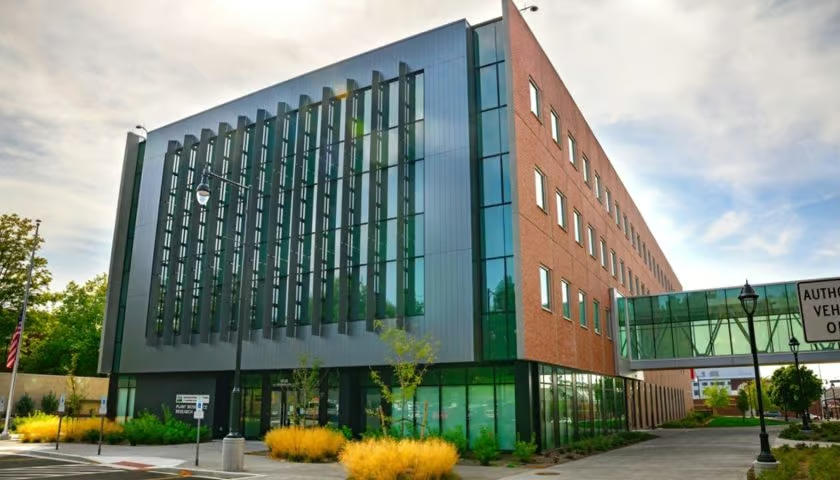
USDA-ARS opens new plant bioscience research facility
The facility houses four ARS research units that will work together on science-based solutions to problems in cereal and pulse crop production affecting US farmers.
-

WACOT Limited renews fertilizer production deal to boost food security
The agreement reaffirms both parties’ commitment to strengthening local agricultural input production, improving farmers’ access to quality fertilizer, and advancing food security in Nigeria.
-

Benin secures US$364M funding from IDB to strengthen sustainable agricultural systems
The funding will modernize the Godomey–Ouidah–Hillacondji road corridor and strengthen agricultural productivity, food security, and climate resilience.
-

Iraq opens modernized plant genetic resources bank to strengthen food security
The bank is designed to safeguard Iraq’s local crop varieties, wild relatives, and traditional seed material, which face increasing pressures from water scarcity, salinity, heat, and changing farming systems.
-
Corteva completes spin-off of seed business
Company completes spin-off of seed business, well positioned to advance its robust pipeline with 12 new actives, including 5 biologicals, for launch in the next decade.