

Commodity & Trade Updates
-

Drought cuts oilseeds production outlook despite expansion in planted area
The USDA’s FASUSDA’s-FAS projects total EU oilseed production at 32.25 million tonnes, down 1% from the previous year, despite planted area rising by almost 7%.
-

Iraq targets 4M tonnes of wheat in 2026/27 winter agricultural plan
The strategic decision aims to maximize national staple grain yields, particularly wheat and barley, while streamlining input supply chains for farmers across the country.
-
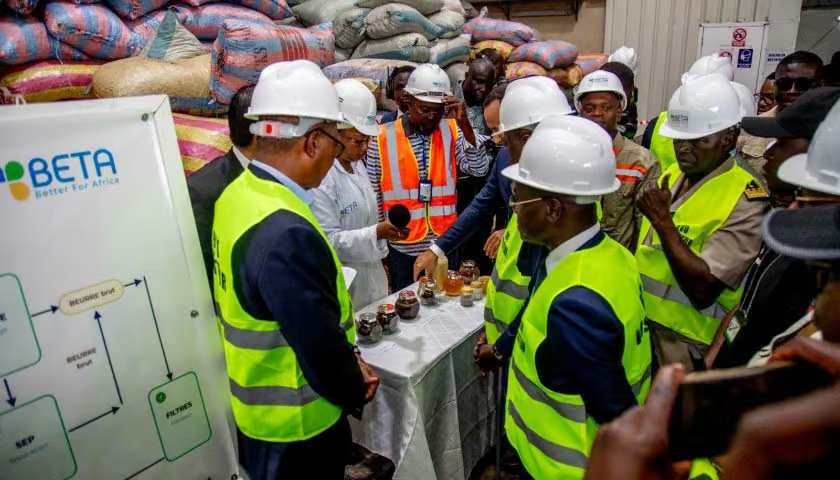
Côte d’Ivoire strengthens soybean processing capacity with new US$17M plant
The facility can process 70,000 tonnes of raw materials a year, turning shea into butter and soybeans into oil and oilseed cake.
-

Black Sea disruption pushes wheat buyers towards alternative origins
Key international wheat buyers from Egypt to Bangladesh are grappling with severe supply chain and trade-flow disruptions as intensified attacks on Black Sea regional infrastructure persist for a third consecutive month.
-
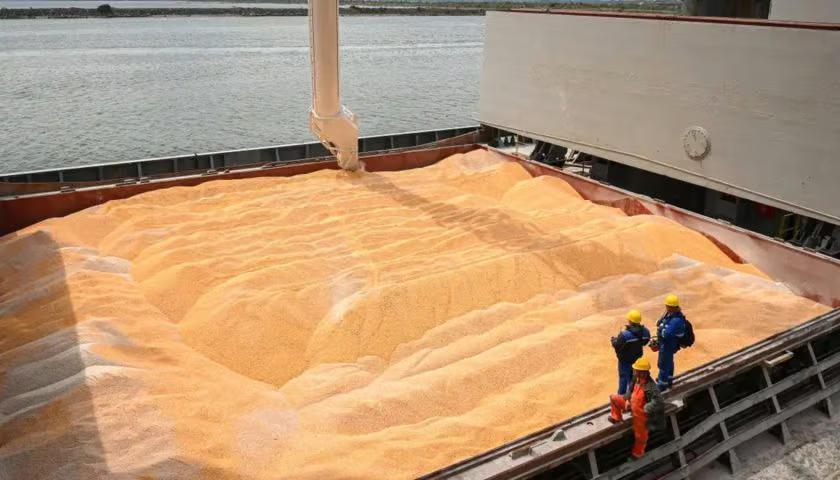
Baltic grain surge disrupts urea exports as port congestion delays shipments
The congestion is affecting nearly all fertilizer producers operating in the region and is tightening near-term urea availability ahead of expected demand from major importers, including Brazil.