
Madagascar strengthens rice production through PAPRIZ 4 programme
The new phase follows three previous stages of PAPRIZ that helped improve farmers’ technical skills, promote better cultivation practices and increase rice productivity.
MADAGASCAR – Madagascar has launched the fourth phase of its rice productivity improvement programme, PAPRIZ 4, as the government seeks to strengthen domestic rice production, improve quality and modernize the country’s rice value chain.
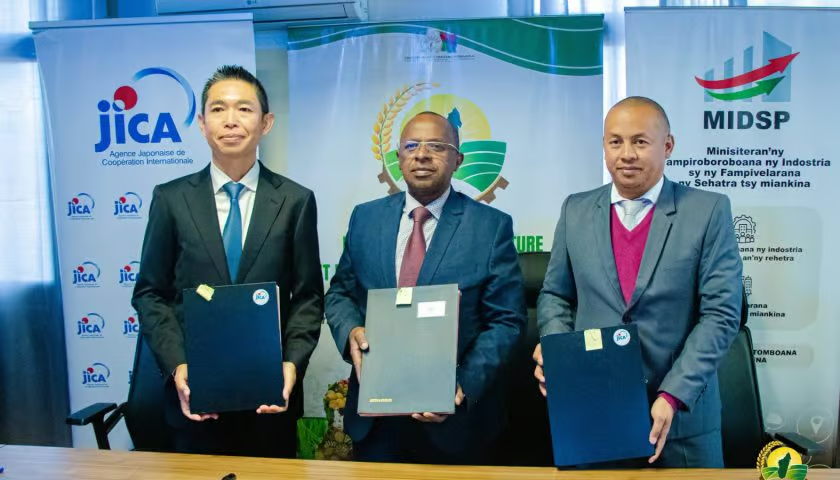
Implemented by the Ministry of Agriculture and Food Sovereignty (MiASA) alongside the Ministry of Industrialization and Private Sector Development (MIDSP) and supported by the Japan International Cooperation Agency (JICA), the initiative aims to enhance domestic yield, improve grain quality, and secure long-term food self-sufficiency.
The project represents a comprehensive effort to transform Madagascar’s agricultural landscape by building upon the technical progress made during previous iterations.
While earlier phases expanded high-yield farming practices and elevated technical skills among smallholders in the Central Highlands, PAPRIZ 4 shifts focus to strengthening the broader national rice value chain.
The five-year roadmap prioritizes five main operational pillars, extending direct intervention to crucial farming hubs across the Alaotra-Mangoro and Boeny regions.
At the center of the strategy is an effort to improve the quality of domestically harvested white rice to make it more competitive against lower-cost imports.
Beyond grain processing, PAPRIZ 4 will also strengthen farmer organizations by improving their links with input suppliers, processors and markets.
Agricultural cooperatives will receive targeted assistance to strengthen financial management, business governance, and direct linkage to commercial buyers, processing facilities, and input suppliers.
To secure hydro-agricultural infrastructure and climate resilience, the program will work alongside Water User Associations (WUAs) to optimize water management, maintain canals, and build operational resilience against severe climate events. These interventions are particularly important as irrigation constraints, climate variability and limited mechanization continue to affect Madagascar’s rice sector.
Human capital development forms another vital component of the strategy, featuring direct partnerships with agricultural training institutions, including the High School of Agronomic Sciences (ESSA) at the University of Antananarivo.
PAPRIZ 4 also includes targeted social inclusion goals to ensure women and young farmers secure leadership roles within local cooperatives and obtain specialized funding via the Agricultural Development Fund (FDA).
The official signing ceremony at Anosy marks a decisive step toward stabilizing domestic grain supplies and insulating the country from external market shocks.
Through these various interventions, PAPRIZ 4 aims to consolidate the achievements of previous phases and contribute to a more productive, better organized, and more resilient rice sector.
This new phase is part of the MiASA’s efforts to strengthen national production and support actors in the rice value chain.
Sign up to HERE receive our email newsletters with the latest news and insights from Africa and around the world, and follow us on our WhatsApp channel for updates.