

Commodity & Trade Updates
-
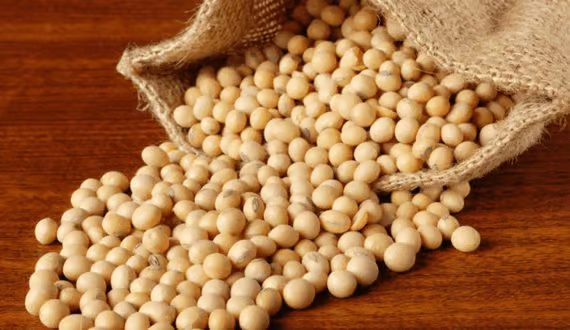
China continues US soybean push amid South American purchases
The renewed push for US oilseeds comes as Brazilian and Argentine suppliers typically dominate global agricultural trade.
-
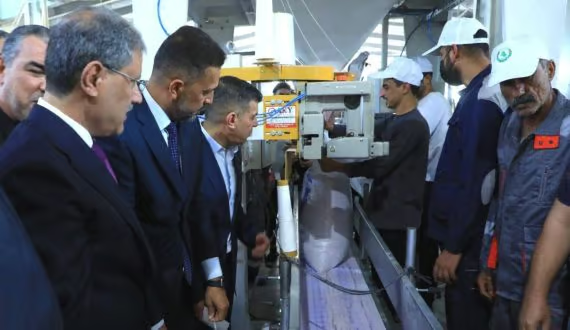
Iraq inaugurates new seed processing lines to boost wheat production
The new lines, inaugurated at a seed processing facility in the Ahleila area, have a combined capacity of 20 tonnes per hour, with each line handling up to 10 tonnes per hour.
-

Visible Industries plans to invest in Kenya’s rice value chain ecosystem
Kenya’s heavy dependence on imported rice is creating a major opportunity for domestic farmers and processors, with a new market-led private-sector initiative seeking to expand production, strengthen post-harvest handling and increase local milling capacity.
-
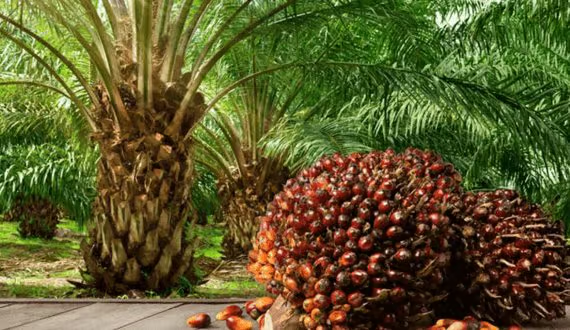
Senegal targets oil palm revival with Indonesian support
The initiative focuses on rehabilitating traditional oil palm plantations, establishing modern refining capacity, and enhancing local value addition to meet surging national and regional demand for edible oils.
-

Senegal’s US$32M project to accelerate peanut processing
The project is expected to help Senegal reduce dependence on imported refined oils, improve oil extraction rates through shorter post harvest intervals, and create a more competitive value chain for smallholder growers.