

Maize set to overtake wheat as Egypt’s leading imported cereal amid feed demand rise
The shift highlights a changing structure in Egypt‘s grain market: wheat remains the country’s most strategically important food crop, but rising demand for poultry and livestock feed is increasing the need for imported maize.
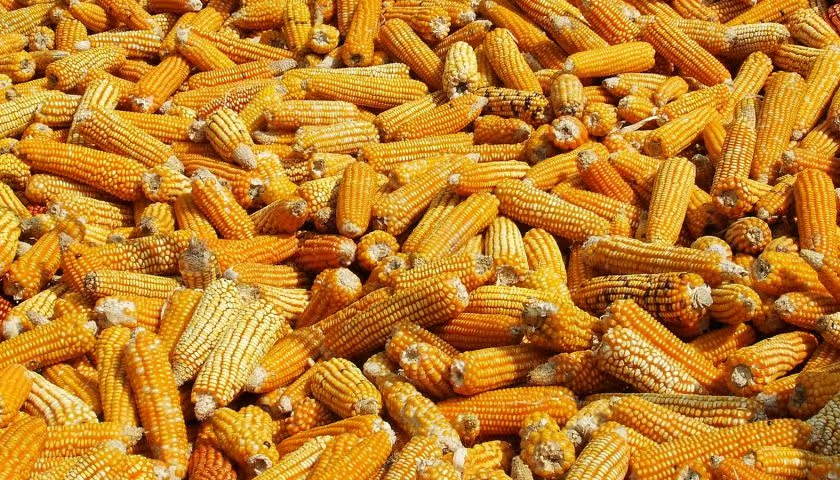
EGYPT – Egypt is on track for an unprecedented shift in its grain trade, with maize potentially overtaking wheat as the country’s largest cereal import in the 2026/2027 marketing year, according to the latest United States Department of Agriculture (USDA) data published in August.
Wheat imports are expected to fall to 13 million tons from 15.5 million tons a year earlier, while corn imports are forecast at 13.2 million tons, up 700,000 tons from the previous marketing year.
If the projection holds, it would mark the first time Egypt has imported more corn than wheat. Wheat is used primarily to make bread, including bread sold through Egypt’s subsidized food program, making it politically sensitive, while maizeis used mainly as animal feed.
The rapid rise in corn demand is driven chiefly by the expansion of the poultry and aquaculture sectors, which together account for more than 85% of domestic corn consumption.
Since the 2022/2023 marketing year, Egypt has more than doubled its corn imports, while domestic production covers only about one-third of the country’s needs.
Egypt produced 1.92 billion broilers and 16 billion table eggs in 2025, compared with 1.4 billion birds and 14 billion eggs annually before 2023, while aquaculture now accounts for around 80% of the country’s fish production.
Should imports reach the projected record of 13.2 million tons, Egypt would remain the world’s fifth-largest corn importer, behind Mexico, the European Union, Vietnam and Japan.
The country overtook South Korea to take fifth place in the 2025/2026 marketing year, five years earlier than projected in the OECD-FAO Agricultural Outlook 2021-2030.
On the supply side, Brazil is expected to capture much of the additional Egyptian demand in 2026/2027, alongside Argentina and the United States, with US corn also regaining ground on competitive pricing and quality, according to USDA’s Cairo office.
The decline in wheat imports reflects an expected increase in domestic production. Egypt’s wheat harvest, which typically begins in mid-April in Upper Egypt governorates before extending through the Nile Delta and into newly reclaimed farming areas by summer, has benefited from government incentives aimed at boosting local supply and safeguarding bread availability.
Even so, domestic wheat consumption continues to climb, driven by population growth and demand tied to food, seed and industrial use.
Trade data show durum wheat and yellow maize remain Egypt’s two dominant agricultural import categories by value, with Russia, Ukraine and the European Union among the leading wheat suppliers.
The shift toward corn underscores the growing weight of Egypt’s livestock and aquaculture industries in shaping the country’s overall grain trade, even as wheat retains its central role in food security policy.
Sign up to HERE receive our email newsletters with the latest news and insights from Africa and around the world, and follow us on our WhatsApp channel for updates.