
Greenfield Milling plans major Utah mill expansion
The expansion follows the successful commissioning of the Richmond facility, which became fully operational in 2025 and represents a major investment in the region’s grain-processing infrastructure.
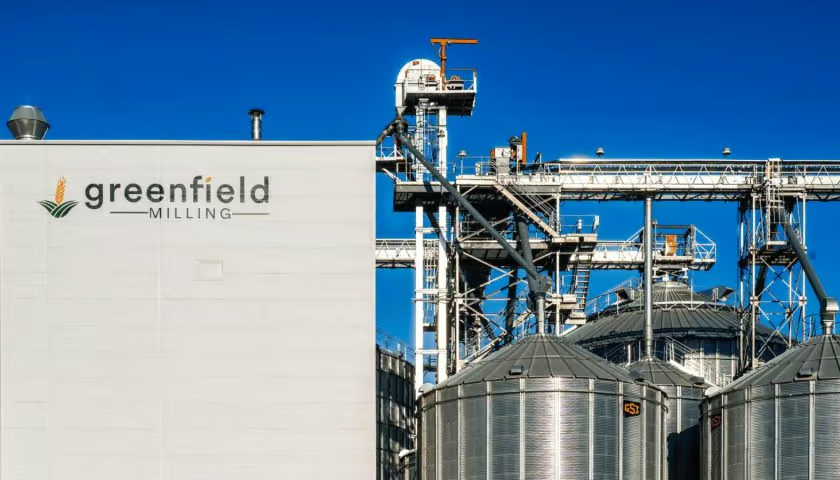
USA – Less than a year after commissioning its flagship flour mill in Richmond, Utah, Greenfield Milling has announced plans for a significant expansion, doubling the site’s current milling capacity to meet surging regional and national demand.
The initial facility began operations in late 2025, and the company now seeks to increase capacity and strengthen its position in the US bakery and food-ingredients market.
It boasts a daily output capacity of 7,500 hundredweight (cwt) and processes both hard and soft wheat sourced primarily from local farmers across Idaho and Utah.
The operation is anchored by a 20-year direct supply agreement with an adjacent snack production plant owned by Campbell’s Co., providing pneumatic flour transport to produce iconic baked goods like Goldfish crackers and Milano cookies.
Under the newly announced phase-two expansion, Greenfield Milling plans to construct a second 7,500-cwt unit slated to begin in 2027 and become operational within 18 months, effectively doubling the site’s processing capacity to 15,000 cwt daily.
Alongside the added milling capacity, the company is securing additional funding to build a brand-new mix plant and expanded warehousing infrastructure.
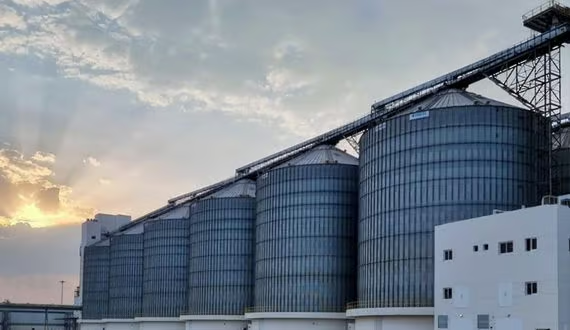
The project will also double the site’s current grain storage capacity from one million bushels to two million.
Founded by industry veterans John Mason and Bryan Ledgerwood, Greenfield Milling operates in strategic partnership with minority investor Nippn Corporation of Tokyo and collaborates with Bunge North America for grain purchasing and feed merchandising.
The mill uses cutting-edge equipment from Italy’s Omas Srl, including advanced Dante tempering systems and inline quality control technologies.
The company’s rapid footprint expansion has already made a profound impact on the local agricultural economy.
Greenfield currently purchases approximately 20% of the surrounding regional wheat supply, with expectations that the new phase will drive that share up to 35% as it emphasizes packaged flour, specialized mixes, and long-term partnerships across the baking and snack food industries.
Sign up to HERE receive our email newsletters with the latest news and insights from Africa and around the world, and follow us on our WhatsApp channel for updates.