

Ukraine’s black sea grain exports drop by 75%
The sharp decline comes at the peak of Ukraine‘s harvest season and has renewed concerns over global food security, particularly for grain-importing countries in Africa and the Middle East.
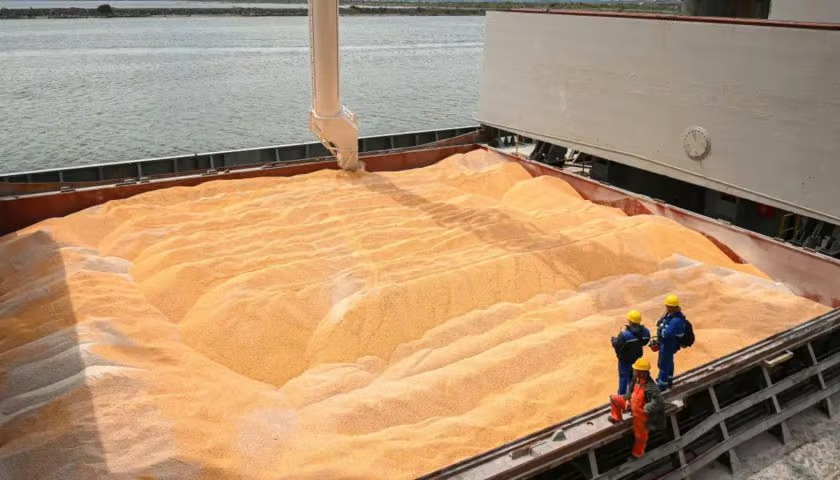
UKRAINE – Grain exports from Ukraine’s vital Black Sea ports dropped by 75% during the first two weeks of August compared to the same period last year, as escalating Russian attacks on ports, cargo vessels and maritime infrastructure cripple one of the world’s most important agricultural export corridors.
A sudden wave of intensified strikes targeting maritime infrastructure and commercial shipping has effectively brought sea transit to a near standstill during the peak harvest season.
The disruption comes at a critical moment for the nation’s agricultural sector, which traditionally relies on Black Sea logistics to move approximately 90% of its grain output.
With cargo ships effectively blocked from entering Black Sea harbors for several consecutive weeks, domestic storage facilities are rapidly reaching total capacity.
Ukrainian officials warn that the country could face a critical storage shortfall of up to 11 million tonnes by November as farmers bring in around 60 million tonnes of newly harvested crops with nowhere to ship them.
The mounting bottlenecks have caused domestic grain prices inside Ukraine to collapse well below production costs, even as global wheat futures spiked to near three-year highs on international commodity markets.
Small and medium-scale agricultural producers are bearing the brunt of the crisis, struggling with dried-up revenue streams and a lack of working capital needed to purchase fuel, pay wages, and fund upcoming autumn planting campaigns.
Industry groups estimate that restrictions on maritime logistics could cost the nation’s agricultural sector between US$2 billion and US$4 billion over the next year.
The blockade has effectively shut down operations at the Greater Odesa port hub, including the key terminals at Odesa, Chornomorsk, and Pivdennyi.
As of mid-August, no new commercial vessel calls had been reported, and trade sources indicate that grain is accumulating inland while exporters scramble to reroute shipments.
Ukraine is now relying on alternative corridors, with rail links to Eastern Europe and Danube river ports each accounting for about 45% of current exports, and the remaining 10% moving by road.
However, these routes have lower capacity and higher costs, and low water levels on the Danube have further constrained flows.
In response to the growing operational freeze, Ukraine’s Agriculture Ministry lowered its grain export forecast for the 2026/27 season to 38-40 million tonnes.
The drastic reduction in outbound shipments threatens to ripple across global supply chains, raising severe food security concerns for import-dependent nations across Africa and the Middle East that rely heavily on Ukrainian wheat and corn.
Sign up to HERE receive our email newsletters with the latest news and insights from Africa and around the world, and follow us on our WhatsApp channel for updates.