
China opens market to Ethiopian soybean meal in strategic trade shift
By reducing its reliance on traditional suppliers such as Brazil, Argentina, Russia, and Uruguay, China aims to secure more stable and diverse feed protein sources
ETHIOPIA – Ethiopia, East Africa’s leading soybean exporter, has gained a foothold in China’s feed market after Beijing approved imports of Ethiopian soybean meal on July 3, 2025, as part of its strategy to diversify protein feed sources.
China’s General Administration of Customs officially approved imports of soybean meal from Ethiopia, opening a new chapter in the two countries’ trade relations.
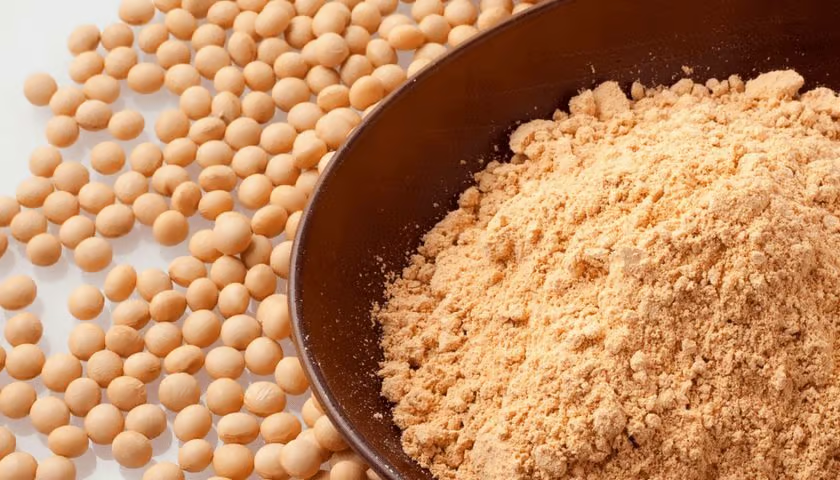
Soybean meal, a high-protein by-product of soybean oil extraction, is widely used in animal feed. Until now, Ethiopia’s exports to China had been limited to whole soybeans. This latest development enables the country to move up the value chain and signals growing international recognition of its oilseed processing potential.
Rosa Wang, an agricultural analyst at Shanghai-based consultancy JCI, told Reuters that China’s move is part of a broader strategy to diversify its agricultural import base.
By reducing its reliance on traditional suppliers such as Brazil, Argentina, Russia, and Uruguay, China aims to secure more stable and diverse feed protein sources for its vast livestock industry.
“The expected volumes remain modest, however,” Wang cautioned. “But it opens the door for more diversified trade and long-term cooperation.”
China’s demand for soybean meal remains substantial. According to the U.S. Department of Agriculture (USDA), the country is forecast to import approximately 60,000 metric tons of soybean meal in the 2024/2025 marketing year, with similar volumes expected in the following year.
Though Ethiopia’s initial shipments will represent a small fraction of this total, the approval provides a long-term growth opportunity for the Horn of Africa nation.
In 2024, Ethiopia exported 29,408 metric tons of soybeans to China, generating nearly US$18 million in revenue, according to data from TradeMap. The new approval is also seen as a vote of confidence in Ethiopia’s compliance with international phytosanitary and food safety standards.
Agricultural officials in Addis Ababa have welcomed the move, emphasizing that the Ethiopian government will work closely with exporters to ensure that shipments meet China’s strict import regulations.
Earlier this month, the Ethiopian Ministry of Agriculture confirmed that soybean meal destined for China would adhere to stringent pest-control and processing standards to ensure product quality and market trust.
The expansion of Ethiopia’s soybean trade comes amid a steady increase in production capacity. USDA Crop Explorer data shows that Ethiopia’s soybean acreage has expanded to approximately 105,000 hectares in 2025, with production estimated at 260,000 metric tons.
While the country still accounts for a small share of global soybean output, the rise in both cultivation and exports signals a growing role in regional and international oilseed markets.
Sign up to HERE receive our email newsletters with the latest news and insights from Africa and around the world, and follow us on our WhatsApp channel for updates.