

AGRA, FAO launch US$580,000 seed sector transformation program in South Sudan
The program seeks to transform South Sudan’s predominantly informal seed system into a formal, competitive, and resilient ecosystem
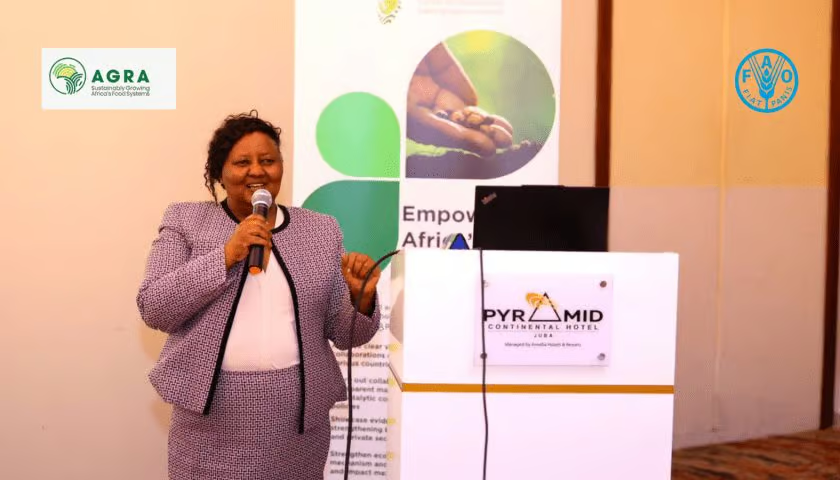
SOUTH SUDAN – The Pan African agriculture development agency, AGRA, in collaboration with the Food and Agriculture Organization of the United Nations (FAO), has officially launched a US$580,000 initiative aimed at strengthening South Sudan’s seed sector.
The project, titled “Support Towards Improved Seed Sector Performance and Competitiveness in South Sudan”, is backed by funding from the Royal Norwegian Embassy in South Sudan.
The program seeks to transform South Sudan’s predominantly informal seed system into a formal, competitive, and resilient ecosystem. It will focus on a comprehensive national seed system assessment, capacity building in seed production and distribution, quality assurance mechanisms, policy and legal reforms, and inclusive stakeholder engagement.
The initiative will be implemented under AGRA’s Center of Excellence for Seed Systems in Africa (CESSA) framework and guided by its Seed Systems Assessment Tool (SeedSAT), a diagnostic instrument previously rolled out in 12 other sub-Saharan African countries.
The SeedSAT tool will be used to evaluate South Sudan’s seed landscape across eight thematic areas and generate data-driven recommendations for a costed national seed investment plan.
Speaking during the launch event in Juba, Prof. Mathew Gordon Udo, Undersecretary at the Ministry of Agriculture and Food Security, welcomed the intervention as “timely and transformative.”
“This project aligns with our national goals to ensure food and nutrition security, create jobs, and empower our youth,” he said.
AGRA’s Director for Seed Systems, Dr. Jane Ininda, emphasized the need for strategic coordination.
“Seed systems are the backbone of agricultural transformation. Through SeedSAT, we are not just diagnosing gaps, we are co-creating solutions with national stakeholders to build resilient, inclusive systems that serve farmers better.”
Christianne Nyakato Kivy, Programme Officer for Development Cooperation at the Royal Norwegian Embassy, underscored the importance of the program in laying the groundwork for sustainable growth:
“This launch marks a significant step toward building a resilient and competitive seed system in South Sudan. This workshop will unite stakeholders to lay the foundation for a sustainable agricultural future, empowering farmers with the tools they need to thrive.”
AGRA’s involvement in South Sudan’s seed sector dates back to 2011. Past efforts led to the release of 37 climate-resilient crop varieties, the training of 12 plant breeders, and support to 10 seed companies that now produce over 1,700 metric tonnes of certified seed annually.
These foundational efforts also enabled the country’s first commercialization of hybrid maize, driving yield improvements among smallholder farmers.
The program also incorporates youth empowerment as a central pillar, providing technical training and integration of young people into the seed value chain. Additionally, SeedSAT will support the ongoing review and validation of the national Seed and Plant Variety Bill to enhance the enabling policy environment.
Sign up to HERE receive our email newsletters with the latest news and insights from Africa and around the world, and follow us on our WhatsApp channel for updates.