
Pladis expands “Back to Farm” program to support regenerative wheat farming
The program brings together farmers, agronomists and supply chain partners to support responsible sourcing, strengthen long-term resilience and help create a more sustainable future for food production.
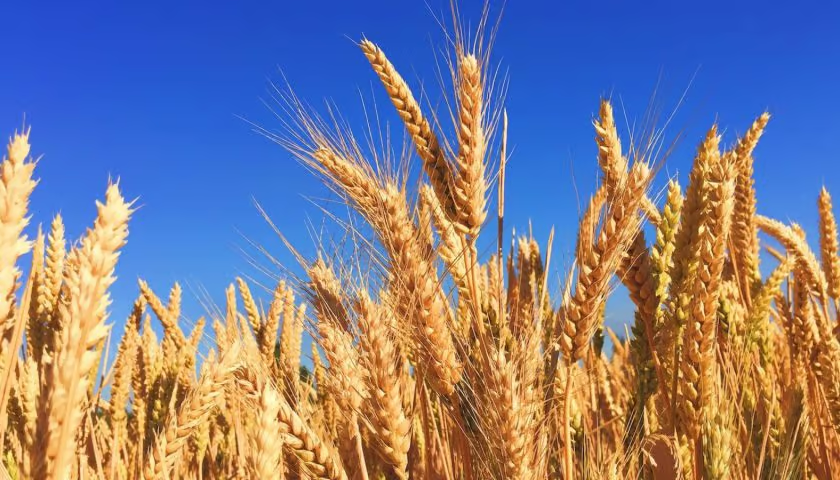
UK – Pladis Global, the biscuit, chocolate and confections maker, has launched Back to Farm, a program designed to help UK farmers apply regenerative agriculture practices on their soil.
The Back to Farm programme brings together wheat growers, agronomists, and supply chain partners to support the transition toward regenerative farming through data-driven decision-making and measurable environmental outcomes.
Initially, the initiative will work with 50 wheat growers across the United Kingdom, who will provide detailed information on their farming practices.
The data will be independently assessed using recognized agricultural measurement tools and verified by specialist partners including YAGRO, Downforce Technologies, and the Cool Farm Tool, ensuring that sustainability improvements are transparent, credible, and scientifically robust.
According to Pladis, the programme has been designed to make regenerative agriculture easier for farmers to adopt, document, and scale.
Participating growers will receive technical guidance and practical support to implement farming methods that improve soil structure, reduce erosion, enhance biodiversity, optimize nutrient management, and increase resilience against extreme weather conditions.
These practices are expected to lower greenhouse gas emissions while maintaining productive and profitable farming systems.
The company has set an ambitious target of sourcing 50% of the wheat used in its UK-manufactured products through the Back to Farm programme by the end of 2030.
Wheat is one of the most important raw materials used in Pladis’ biscuit portfolio, including McVitie’s Digestives and other popular products.
By investing directly in farming communities, the company aims to secure long-term supplies of high-quality wheat while helping producers adapt to climate change and evolving environmental regulations.
The regenerative farming drive aligns with Pladis’s broader global commitment to achieve Net Zero carbon emissions by 2050.
By supporting practices that increase soil carbon sequestration and reduce reliance on synthetic fertilisers, the company aims to secure a sustainable, high-quality ingredient supply while contributing to nature recovery across the British countryside.
The launch comes as regenerative agriculture gains momentum across the global food industry. Leading manufacturers including Nestlé, Mars, PepsiCo, Mondelēz International, and Ferrero have introduced similar programmes to improve soil health, reduce carbon emissions, and strengthen agricultural supply chains.
Increasing climate variability, rising production costs, and growing consumer demand for sustainably produced food have accelerated investment in regenerative farming practices that restore ecosystems while maintaining crop yields.
Sign up to HERE receive our email newsletters with the latest news and insights from Africa and around the world, and follow us on our WhatsApp channel for updates.