
Ukraine opens registration for duty-free soybean, rapeseed exports through digital farm platform
The new system allows farmers to apply online for duty-free export access while grain markets continue to adjust to weaker corn demand.
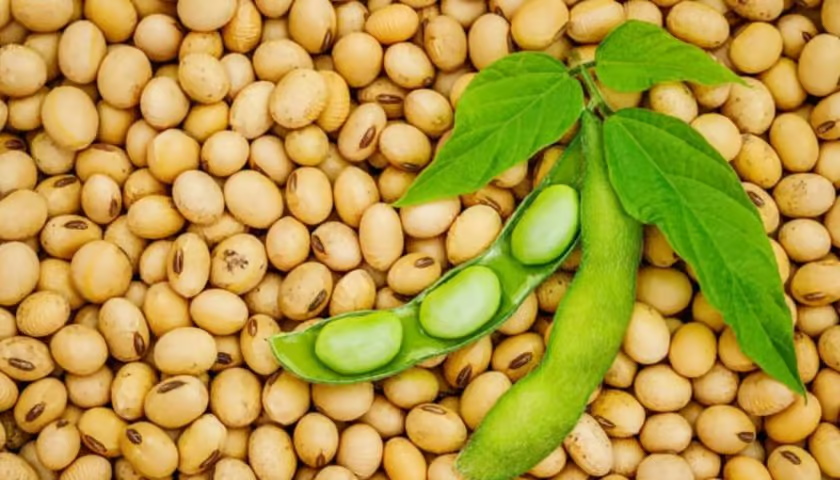
UKRAINE – Ukraine has opened registration for agricultural producers seeking duty-free soybean and rapeseed export access for the 2026/27 marketing season through the State Agrarian Register (DAR), the country’s digital platform for farmers.
The registration process began on July 1 and is available to both agricultural companies and individual farmers. Authorities will accept applications for rapeseed exports from July 1 until April 1, while soybean registrations will run from September 1 until June 1 next year.
Under the program, producers can export up to five tonnes of rapeseed and 3.5 tonnes of soybeans per hectare of agricultural land. Farmers may also revise their declared harvest data once during the application period.
According to Ukraine’s Ministry of Economy, Environment and Agriculture, the online system aims to make export administration simpler, reduce paperwork, and give both producers and government agencies a clearer view of export activity. The ministry has urged eligible farmers to complete their registration through DAR early to secure access to the duty-free export program.
The move comes as Ukraine’s grain market continues to respond to changing export demand.
Recent data from S&P Global Commodity Insights shows that Ukrainian corn export prices have declined after demand from Turkey weakened. Platts assessed Ukraine corn FOB POC at US$229 per metric tonne on June 16, down from US$240 per metric tonne on May 15.
The earlier price increase followed Turkey’s decision to introduce a three million metric tonne corn import quota with a reduced customs duty of 5% between April 20 and July 31.
Turkey has remained Ukraine’s largest corn buyer during the 2025/26 marketing year, importing 4.8 million metric tonnes between September and May. That accounted for about 30% of Ukraine’s total corn exports during the period.
However, Turkish feed manufacturers have started replacing more corn with wheat and barley as the local wheat harvest gathers pace.
“Corn consumption has come down, and most feed producers will change their ratios toward feed wheat as the harvest has started,” a Turkey-based importer said. “There is also the cost of finance, which is high. It doesn’t mean the quota has to be fulfilled.”
With buying from Turkey slowing, Ukrainian exporters have reduced prices in an effort to attract European buyers. Even so, demand has remained weak. Importers in Italy have reported lower feed use, while traders in Spain say corn from South America continues to compete strongly with Ukrainian supplies.
Sign up to HERE receive our email newsletters with the latest news and insights from Africa and around the world, and follow us on our WhatsApp channel for updates.