
Pladis Türkiye collaborate with Sabancı University to pioneer nutrient-rich wheat innovation
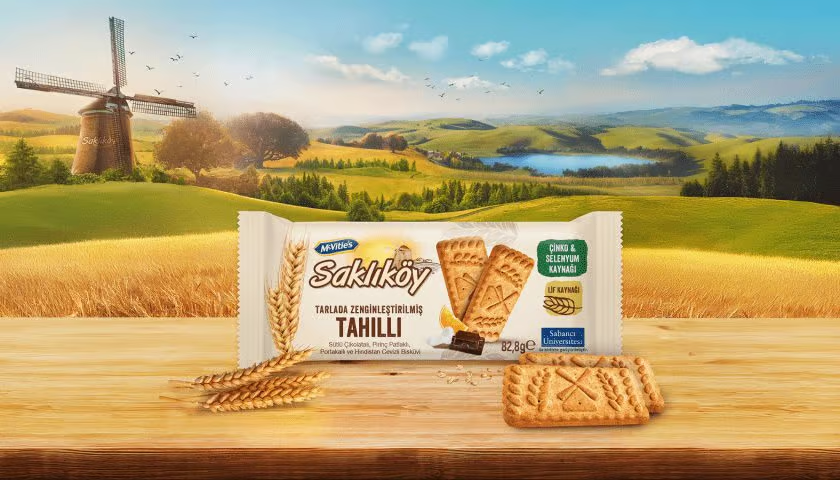
The enriched flour was used to produce a limited-edition Saklıköy Field-Enriched Grain Biscuit.
TÜRKIYE – In a groundbreaking collaboration, pladis Türkiye and Sabancı University have unveiled the results of their two-year “Biofortification Project,” aimed at enhancing the nutritional value of wheat through field-based enrichment with zinc and selenium.
The project’s initial success resulted in the introduction of the Saklıköy Field-Enriched Grain Biscuit, crafted from wheat enhanced with vital nutrients via foliar fertilisation.
This initiative marks a significant stride in sustainable agriculture and public health, addressing mineral deficiencies highlighted in Türkiye’s national nutrition guidelines.
Led by Professor Dr. İsmail Çakmak from Sabancı University’s Faculty of Engineering and Natural Sciences, the project utilised foliar fertilisation techniques to boost the mineral content of wheat directly in the field.
“The Biofortification Project was a valuable opportunity to draw attention to zinc and selenium minerals, which are highlighted in the Ministry of Health’s Turkey Nutrition Guide as being deficient in our country, and to provide social benefits. Over the two-year project, the zinc and selenium content of wheat were enriched in the field,” said Özgür Kölükfakı, Managing Director for Türkiye and Central Asia and CEO of Ülker.
The results were striking: zinc levels increased by 55%, while selenium content surged 28-fold in the harvested grain.
These gains were successfully retained through processing, with the resulting whole wheat flour showing 46% more zinc and 18 times more selenium than conventional flour.
“Over the two-year project, the zinc and selenium content of wheat were enriched in the field. This wheat was turned into flour in our factory. Soon after, we introduced the limited-edition Saklıköy Field-Enriched Grain Biscuit to our consumers, concretising the entire process from field to shelf,” said Kölükfakı.
The enriched flour was used to produce a limited-edition Saklıköy Field-Enriched Grain Biscuit, now available to consumers.
This product not only showcases the potential of biofortified crops but also reflects Pladis Türkiye’s commitment to regenerative agriculture and nutritional innovation.
Kölükfakı emphasised the importance of wheat sustainability, noting that it accounts for 39% of the company’s raw material usage.
“We focus on various topics, from breeding biscuit wheat to regenerative agriculture aimed at improving soil health. When developing projects, we attach great importance to collaborating with experts in the field and contributing to society and our stakeholders,” added Kölükfakı.
Beyond product development, the partnership underscores a broader mission: to improve soil health, support expert-led agricultural research, and deliver social benefits through nutrient-rich food.
The project also complements Pladis Türkiye’s ongoing work with the Bahri Dağdaş International Agricultural Research Institute, including the development of Aliağa Wheat for Biscuits and the promotion of ancient varieties like Kavılca wheat.
This collaboration sets a precedent for how food companies and academic institutions can jointly tackle nutritional challenges while advancing sustainable farming practices.
With the success of the Saklıköy biscuit, Pladis Türkiye and Sabancı University have not only enriched wheat but also the conversation around food, health, and innovation.
Sign up to HERE receive our email newsletters with the latest news and insights from Africa and around the world, and follow us on our WhatsApp channel for updates.