
Millers for Nutrition, CMA to host Kenya’s 2025 fortification awards
The event will celebrate millers who have demonstrated outstanding performance in food fortification.
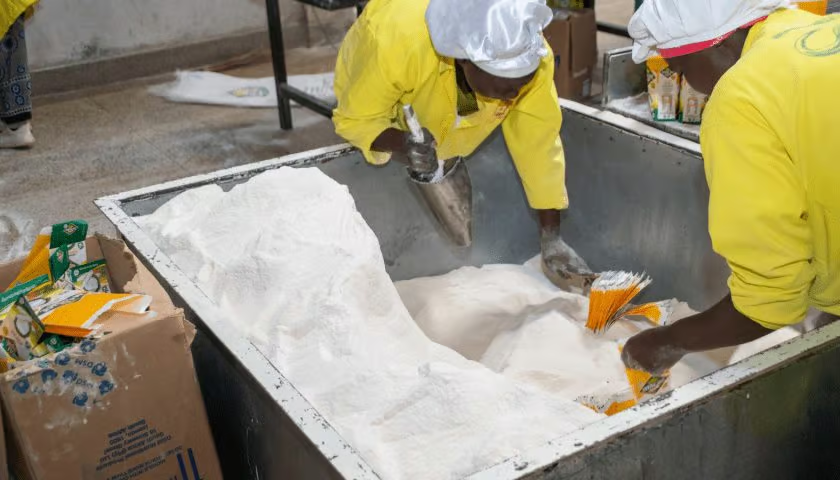
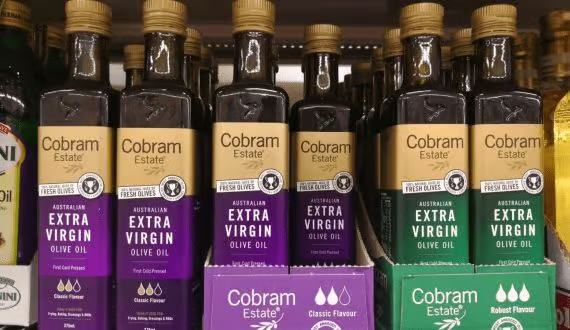
KENYA – Kenya is preparing to host the Kenya Micronutrient Fortification Index (KMFI) Awards 2025 on September 16 in Nairobi, an event that will shine a spotlight on food millers excelling in the fortification of staple foods such as wheat flour, maize flour and edible oils.
The awards, organised by Millers for Nutrition (M4N) in partnership with the Cereal Millers Association (CMA), will draw together leading figures from industry, government, regulatory bodies, development agencies and civil society.
In a statement, Millers for Nutrition said the event would celebrate millers that have consistently demonstrated strong performance in food fortification, highlight new innovations shaping the future of large-scale food fortification, and stimulate strategic discussions on how to scale and sustain fortification efforts.
According to M4N, recent national surveys reveal that 18 percent of Kenyan children under the age of five are stunted, while over 60 percent of women suffer from iron deficiency. These figures point to persistent micronutrient gaps in the population despite two decades of mandatory fortification policies.
Kenya has long been considered a leader in fortification in East Africa. The country successfully eliminated iodine deficiency through universal salt iodization and later made the fortification of maize flour, wheat flour and edible oils a legal requirement.
Food processors have since played an important role in translating these policies into action, ensuring that fortified products are more widely available across the country.
The Kenya Micronutrient Fortification Index, launched in 2023, was designed as a self-regulatory mechanism to complement government enforcement by providing benchmarking, recognition and visibility for millers. By rewarding good practice, the Index encourages peer learning and creates incentives that can drive higher compliance levels.
Yet while the policy framework is strong, recent studies show that compliance remains uneven. Research in Nairobi County found that many maize flour brands fell short of the required levels of iron, zinc and vitamin A, with only about a quarter of samples tested meeting the standard for zinc and vitamin A.
Another national study reported that fewer than 12 percent of fortified maize flour samples fully complied with micronutrient standards. Encouragingly, there are signs of improvement: data released in 2024 indicated that compliance among maize millers has risen from just 16 percent in 2018 to about 45 percent, suggesting that industry engagement and regulatory oversight are beginning to pay off.
However, smaller millers, who supply a significant share of rural markets, report that they are less likely to comply with fortification requirements due to cost and technical barriers. At the same time, consumer awareness remains relatively low, meaning fortified products are not always demanded or distinguished by shoppers.
Technical issues such as nutrient stability during storage and the bioavailability of minerals like zinc and iron further complicate matters, raising questions about whether fortified foods consistently deliver the intended health benefits.
Despite these gaps, Kenya’s fortification journey has already delivered important wins. The KMFI Awards, therefore, come at a crucial moment, offering a platform to celebrate those millers who are leading the way, while reminding the sector that much more must be done to achieve universal compliance.
Sign up to HERE receive our email newsletters with the latest news and insights from Africa and around the world, and follow us on our WhatsApp channel for updates.