

Europe’s soybean production to decline 20% in 2026 amid climatic challenges
The EU average yield is put at 2.24 tonnes per hectare, about 15% below the five-year average, forcing Europe to depend even more heavily on international imports.
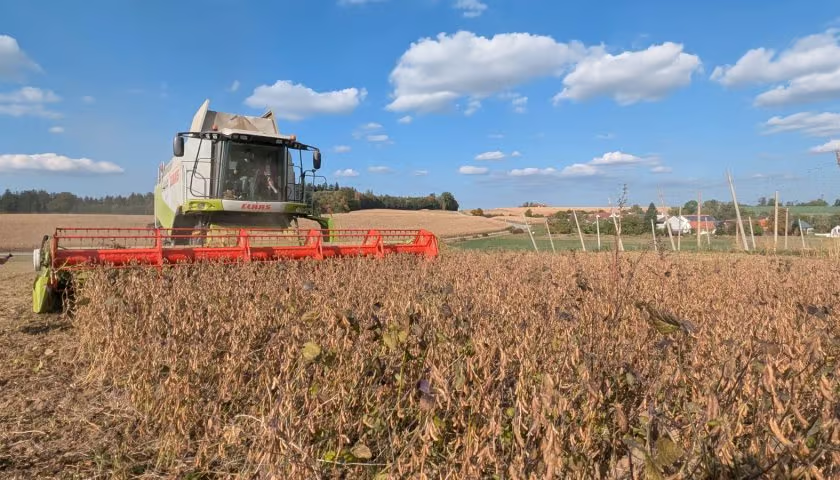
EUROPE – European Union (EU) soybean production is forecast to fall by about 20% in 2026 to 2.4 million tonnes, down from the previous year’s output, as prolonged heatwaves and severe drought reduce yields across major producing countries.
However, expanding production in Germany and Poland highlights opportunities to strengthen regional soybean supply chains and reduce Europe’s dependence on imported protein crops.
According to the latest 2026 Market Report published by Donau Soja on 5 November 2026, the EU’s average soybean yield is estimated at 2.24 tonnes per hectare, approximately 15% below the five-year average.
The decline reflects challenging weather conditions, particularly high temperatures and limited rainfall during critical crop development stages. In addition, cultivated soybean areas have contracted in several European countries.
Italy, the EU’s largest soybean producer, is expected to harvest about 900,000 tonnes, a 15% decline from 2025.
Austria is facing a steeper reduction, with production forecast to fall by 36% to 180,000 tonnes.
Ukraine, an important supplier of non-genetically modified (non-GM) soybeans to European markets, is also experiencing lower output.
Its 2026 soybean harvest is estimated at 4.4 million tonnes, approximately 10% below the previous year’s level.
Export performance further illustrates the pressure on regional supplies, with only around 27,000 tonnes of Ukrainian soybeans shipped in September 2026, roughly one-third of the volume recorded during the same month in 2025.
Despite the overall decline, Poland and Germany are emerging as positive performers. Poland’s soybean production is expected to increase by more than 15% to 264,000 tonnes, making it the EU’s third-largest producer in 2026.
Germany is also forecasting a 2.4% increase to 134,000 tonnes, showing the potential to expand soybean cultivation in suitable European growing regions.
The declining harvest is expected to increase Europe’s reliance on imported soybeans and soybean products. Donau Soja estimates that the EU’s soybean self-sufficiency ratio will fall from approximately 8% in the 2025/26 marketing year to 6% in 2026/27.
Aurélie Tournan, General Manager of Donau Soja, highlighted the need for stronger investment across the agricultural value chain, noting that Europe’s low soybean self-sufficiency presents both a vulnerability and an opportunity to expand domestic production.
The organization is calling for stronger cooperation between farmers, processors, feed manufacturers and food producers, alongside supportive agricultural policies.
Expanding regional processing capacity, improving crop varieties and strengthening farmer access to appropriate production technologies could help increase European soybean output.
For Europe’s food and feed industries, developing regional soybean supply chains could improve protein availability, strengthen market resilience and reduce exposure to international commodity market disruptions.
Sign up to HERE receive our email newsletters with the latest news and insights from Africa and around the world, and follow us on our WhatsApp channel for updates.
