

AI takes center stage at IAFP 2025 with real-world food safety solutions
These included AI-driven tools that enhance decision-making, streamline compliance, and proactively mitigate risks.
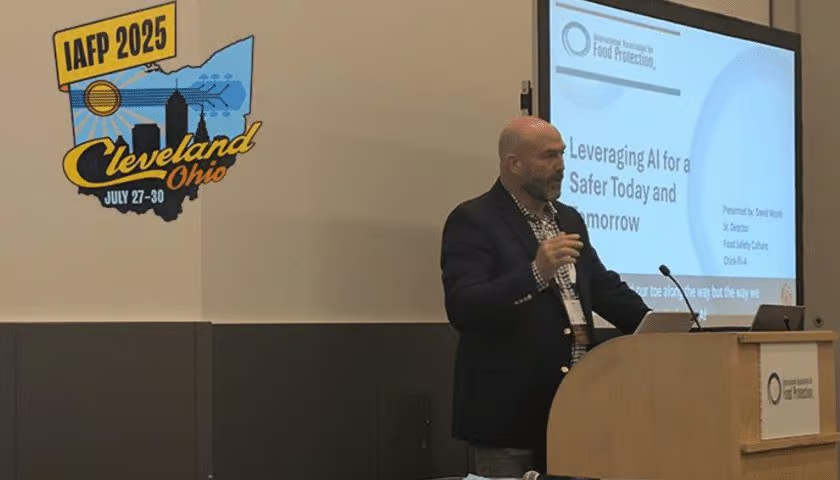
USA – At the 2025 International Association for Food Protection (IAFP) Annual Meeting in Cleveland, Ohio, artificial intelligence officially stepped out of the realm of hype and into the spotlight as a transformative force in food safety.
Industry leaders, regulators, and tech innovators gathered to showcase how AI is already delivering measurable improvements across the food supply chain, from predictive modeling to microbial management.
During the symposium titled “Cutting Through the Hype: Real-World Benefits of AI in Food Safety,” speakers from Ecolab, Creme Global, Chick-fil-A, and the Food and Drug Administration (FDA) shared compelling case studies.
These included AI-driven tools that enhance decision-making, streamline compliance, and proactively mitigate risks.
David Monk, Senior Director of Restaurant Food Safety Culture at Chick-fil-A, highlighted how AI is being used to forecast pathogen growth, simulate Norovirus spread, and predict product temperatures during power outages.
These tools allow teams to respond faster and more accurately to complex food safety challenges.
Amani Babekir of Ecolab demonstrated how historical data, such as environmental monitoring and inspection reports, are being used to predict compliance levels at retail locations. This enables targeted interventions and more intelligent resource allocation.
Babekir also revealed how Generative AI (GenAI) is being deployed to generate root cause analyses and corrective actions when hygiene issues arise, improving microbial environmental management.
Brendan Ring of Creme Global emphasised AI’s role in data integration across fragmented food systems. His team is contributing to a multi-agency FDA platform that consolidates siloed data from bodies like the U.S. Department of Agriculture (USDA) and Environmental Protection Agency (EPA).
Additionally, Brendan spotlighted the Food Industry Intelligence Network (FIIN), where over 70 companies anonymously share product testing data to identify trends and detect emerging risks.
Ring noted that AI is now capable of extracting insights from previously inaccessible unstructured data, such as regulatory documents and scientific publications.
In one example, complex legislation was converted into digestible formats like AI-generated podcasts, making compliance more accessible.
The overarching message from IAFP 2025 was clear: AI is no longer a futuristic concept; it’s a practical tool reshaping how food safety is managed.
From predictive analytics to collaborative data ecosystems, technology is helping the industry shift from reactive to proactive risk management.
As food systems grow more complex and consumer expectations rise, AI is proving to be a powerful ally, inspiring the industry to safeguard public health and drive innovation.
Sign up to HERE receive our email newsletters with the latest news and insights from Africa and around the world, and follow us on our WhatsApp channel for updates.