

Senegal develops national wheat strategy to reduce imports
It will also address key challenges such as productivity, local processing capacity, and environmental sustainability.
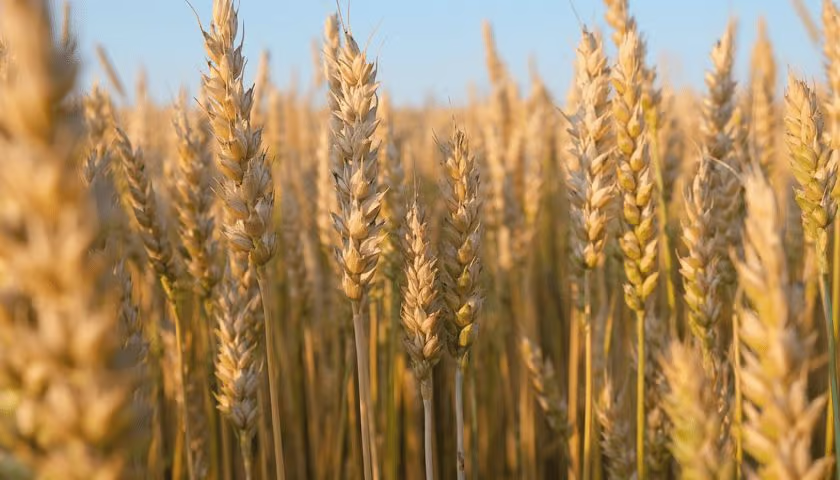
SENEGAL – Senegal is laying the groundwork for a comprehensive national strategy to develop its wheat sector, aiming to reduce reliance on imports and establish a sustainable domestic supply chain.
The initiative, unveiled during a two-day workshop held in Saint-Louis from July 29 to 30, 2025, brought together farmers, researchers, processors, and government officials to shape the future of wheat cultivation in the country.
Led by the Directorate of Research and Innovation under the FIRST ACT project, the strategy seeks to transform wheat from a marginal crop into a viable agricultural pillar.
Since 2023, the Senegalese Institute for Agricultural Research (ISRA) has developed and tested eight local wheat varieties, which are now being trialed in the Senegal River Valley.
These demonstration plots have shown promising results in terms of yield and adaptability to local conditions.
Project coordinator El Hadj Malick Lèye emphasised the collaborative nature of the initiative, noting that the workshop marked a critical step in aligning stakeholders and setting clear objectives.
“This program brings together all actors and partners to discuss the rollout of a national wheat development strategy,” stated Malick.
The upcoming strategy will focus on scaling up seed distribution, organising the wheat value chain, and attracting both public and private investment.
It will also address key challenges such as productivity, local processing capacity, and environmental sustainability.
Training programs have already begun to equip farmers with the skills needed to cultivate wheat effectively, signalling growing interest in a crop that has historically been overlooked in Senegal.
The government’s goal is to reduce wheat imports by at least 40% by 2028. In 2024 alone, Senegal imported over 900,000 tonnes of wheat valued at US$301.3 million, according to the National Agency for Statistics and Demography (ANSD).
As global food systems face increasing pressure, Senegal’s proactive approach to wheat development reflects a broader commitment to food sovereignty, climate resilience, and inclusive agricultural growth.
The strategy is expected to unlock new opportunities for rural communities while strengthening the nation’s food security.
Sign up to HERE receive our email newsletters with the latest news and insights from Africa and around the world, and follow us on our WhatsApp channel for updates.