

Morocco’s Phosphate industry helps cushion economy as global growth slows
Rising fertilizer exports are helping Morocco manage higher energy costs and weaker global economic growth, according to the World Bank.
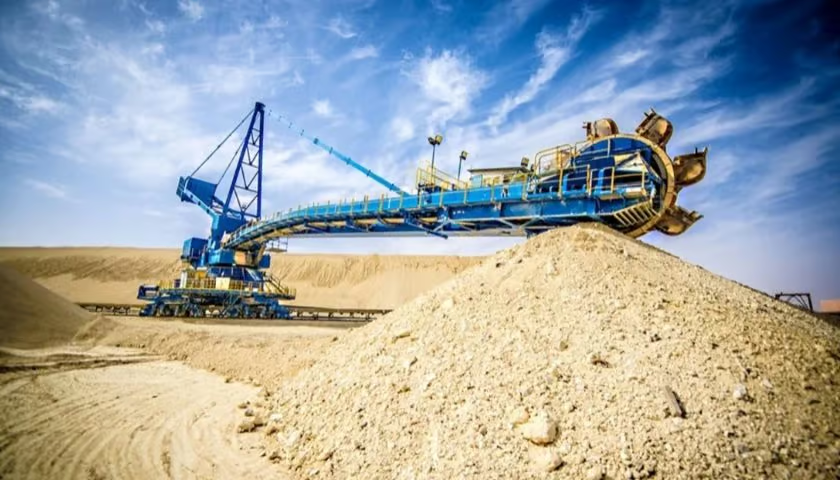
MOROCCO – Morocco’s phosphate industry is helping support the country’s economy as global growth slows and energy costs continue to rise, according to the latest Global Economic Prospects report from the World Bank.
The report projects global economic growth will slow from 2.9% in 2025 to 2.5% in 2026 before improving slightly between 2027 and 2028. Ongoing conflict in the Middle East has added pressure to global energy markets and increased uncertainty across many economies.
The World Bank expects commodity prices to rise by 22% in 2026, while oil prices could climb by 36% compared to 2025 levels. These increases present a challenge for countries that rely on imported energy, including Morocco, where higher fuel costs can affect household spending, government finances, and trade balances.
However, Morocco’s position as a major phosphate producer is helping offset part of that pressure. The World Bank said higher fertilizer prices are expected to increase export earnings and help balance rising import costs.
Morocco holds about 70% of the world’s phosphate reserves and has strengthened its role in the global fertilizer market over the past decade. The country has also expanded fertilizer production rather than relying mainly on exports of raw phosphate, helping it capture more value from the sector.
The World Bank noted that industrial exports continue to benefit from Morocco’s efforts to diversify its economy and strengthen links with global supply chains. Tourism also remains an important source of growth, supported by the country’s stability and increasing appeal among international visitors.
At the same time, Morocco continues to invest in infrastructure, renewable energy, and industrial development to strengthen its economy against external pressures. Still, the World Bank cautioned that Morocco remains vulnerable to swings in global energy markets because it continues to import hydrocarbons. Higher import costs could contribute to a wider current account deficit in 2026.
The report comes as phosphate and fertilizer producer OCP Group moves ahead with new investments across Morocco. Earlier this month, the company announced plans to raise MAD 5 billion (US$540 million) through a perpetual subordinated bond issue to support fertilizer production, renewable energy projects, water supply systems, and green ammonia manufacturing.
OCP also plans to increase annual plant nutrition production capacity from 16 million tonnes to 19 million tonnes by 2027 through projects that include a new phosphate mine in Meskala and a new industrial platform in Mzinda. The investments support Morocco’s broader efforts to strengthen industrial output while reducing dependence on imported fossil fuels.
Sign up to HERE receive our email newsletters with the latest news and insights from Africa and around the world, and follow us on our WhatsApp channel for updates.