

Ukraine imposes 10% export duty on soybeans to boost domestic processing
Under the new law, farmers and cooperatives exporting their own produce are exempt from the duty.
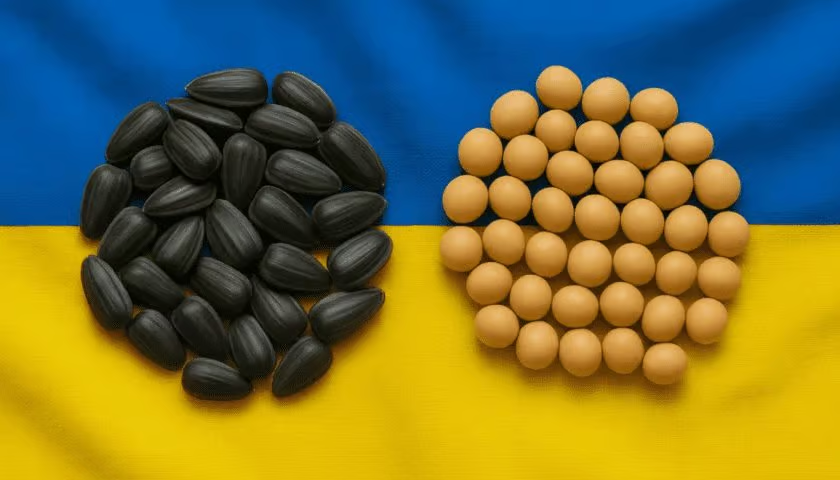
UKRAINE – Ukraine has officially imposed a 10% export duty on soybeans and rapeseed, effective September 4, 2025, in a bid to stimulate domestic processing and increase state revenues amid ongoing conflict and economic pressures.
The move, signed into law by President Volodymyr Zelenskyy, is part of broader amendments to the Tax Code aimed at redirecting raw oilseed flows toward local crushing facilities.
While the government claims the measure will strengthen Ukraine’s agri-industrial base, the decision has triggered immediate disruption across export channels.
The Ukrainian Agri Council (UAC) reported that shipments of soybeans and rapeseed have been virtually halted due to confusion over customs documentation and origin verification.
Vessels are reportedly stranded at ports, unable to proceed with mixed cargoes sourced from both producers and traders.
Under the new law, farmers and cooperatives exporting their own produce are exempt from the duty.
However, the lack of a clear mechanism to verify product origin has forced many producers to pay the full tariff, thereby undermining the intent of the exemption.
Customs authorities have annulled periodic declarations, further complicating logistics and triggering financial losses for traders.
Industry analysts warn that the duty could have unintended consequences.
The USDA’s Foreign Agricultural Service projects a 24% drop in soybean planted area for the 2025-26 season, as farmers shift acreage to corn.
Soybean output is now forecast to fall 36% to 4.9 million tonnes, down from earlier estimates of 7.6 million tonnes.
Domestic processors, meanwhile, have welcomed the move, viewing it as a strategic opportunity to expand crushing capacity and capture more value-added exports.
Officials expect this policy to increase domestic processing utilization, create jobs, and contribute over 7 billion Ukrainian hryvnias (US$170.38M) in state revenues.
However, critics argue that the policy risks depressing farmgate prices and eroding farmer incomes in the short term.
Beginning in 2030, the export duty will be gradually reduced by one percentage point annually until it reaches 5%, suggesting a long-term transition toward a more balanced trade policy.
As Ukraine navigates the economic strains of war and global market volatility, the soybean duty underscores the tension between fiscal necessity and agricultural competitiveness.
Whether the measure succeeds in reshaping Ukraine’s oilseed economy or simply stalls it will depend on swift regulatory clarity and effective stakeholder coordination.
Sign up to HERE receive our email newsletters with the latest news and insights from Africa and around the world, and follow us on our WhatsApp channel for updates.