
Ugandan grain buyers warned against fueling market for substandard maize
Grain buyers have been urged to stop offering low prices for poor-quality maize.

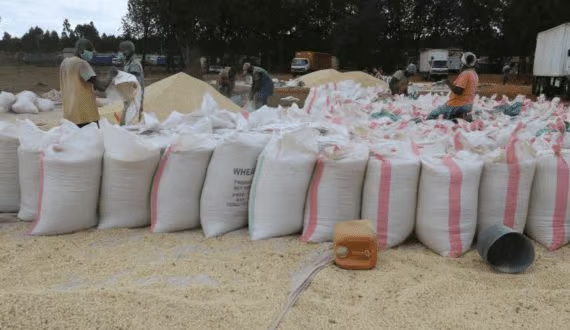
UGANDA – Grain buyers have been urged to cease offering low prices for poor-quality maize, as such practices encourage the trade of substandard grain, distort the market, and compromise consumer health.
Uganda currently produces approximately 5.7 million metric tonnes of grain annually, with maize accounting for nearly 3 million metric tonnes.
The call was made on August 6, 2025, by Humphrey Mutaasa, Chief Technical Officer at the Grain Council of Uganda and Consultant with the World Bank’s International Finance Corporation.
“If there is no market, there will not be supply, but if some processors continue offering lower prices for this bad maize, the industry will not realise its objective of promoting the sale of quality grains,” Mutaasa said.
The warning came during the Certified Grain Buyer/Supplier Symposium, organised by the Grain Council of Uganda in partnership with the International Finance Corporation at the Four Points Sheraton Hotel in Kampala.
According to the East African Exchange, Grade 3 maize, a lower quality category, is defined by a maximum of 7 % insect damage, 7 % rotten, diseased, or discoloured grains, and 3 % foreign matter. Additionally, it may contain up to 5 % immature or shrivelled grains and 10 % broken grains.
The symposium aimed to connect certified grain buyers with suppliers of certified maize, to enhance trade in quality grains and safeguard consumer interests.
At the same event, Patricia Ejalu, Deputy Executive Director of the Uganda National Bureau of Standards (UNBS), addressed a persistent issue: traders frequently purchase roadside maize, package it for export, and face repeated rejections of Uganda’s grain.
She explained that the UNBS and the Ministry of Agriculture, Animal Industry and Fisheries, via their crop inspection and certification departments, would issue joint clearance permits for exporters.
“UNBS will issue the quality mark and the ministry will issue the SPS (Sanitary and phytosanitary standards) permit, and that is when grains will be cleared for export,” Ejalu said.
The objective is to ensure that only certified grains are exported, and that suppliers meet stipulated standards before selling to certified buyers.
Sign up to HERE receive our email newsletters with the latest news and insights from Africa and around the world, and follow us on our WhatsApp channel for updates.