

Kenyan lawmakers raise alarm over NCPB’s use of illegal 90 kg maize bags
NCPB uses 90kg bags for its strategic grain reserves and purchases, despite the crops (food crops) regulations 2019 capping the weight for packaging food crops at 50kgs.
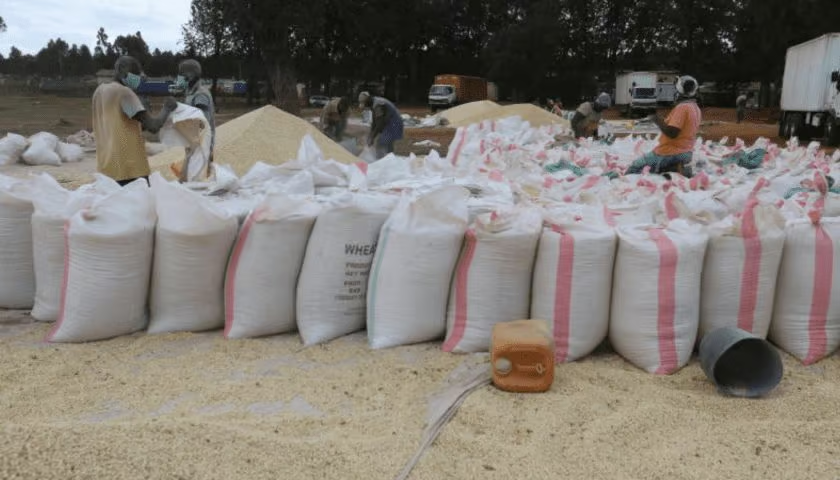
KENYA – The Kenya National Cereals and Produce Board (NCPB) has come under heavy scrutiny for continuing to package maize in 90-kilogram bags, in defiance of the Crops (Food Crops) Regulations, 2019, which strictly caps packaging at 50 kg per unit.
Section 36(3) of these regulations specifically forbids handling or trading in food crops, such as maize, barley, finger millet, pearl millet, rice, sorghum, wheat, and pasta wheat, unless they are packaged in compliance with the prescribed weight limit.
“A grower, dealer, or processor shall not handle or trade in food crops or food produce that is not packed in conformity with the sub-regulations,” the law states.
The National Cereals and Produce Board remains central to Kenya’s agricultural framework—tasked with managing strategic food reserves, stabilising markets, distributing fertiliser, providing post-harvest services, and executing market interventions.
Its procurement and packaging decisions directly influence farmers’ profitability and the country’s food availability.
Legal non-compliance undermines farmers
Nandi Senator Samson Cherargei brought the issue to the Senate floor, highlighting that the regulations are uniformly applicable across all listed food crops under the Crops Act (Cap. 318).
He noted that while crops like beans, pigeon peas, and cowpeas are purchased by NCPB in 50 kg bags, maize continues to be packaged in 90 kg bags, a clear discrepancy.
“The committee must establish the rationale behind this non-compliance. Are there specific challenges informing the decision? Why the disparity between maize and other crops?” he asked.
Senator Cherargei has requested that the Senate Agriculture Committee summons NCPB management for an explanation.
Speaker Amason Kingi has instructed the Agriculture Committee to investigate whether NCPB plans to revise maize packaging standards to align with legal requirements and, if so, the timeline for implementation.
The inquiry will also assess the effect of the current packaging practice on farmers’ incomes and the sustainability of their operations, as well as NCPB’s broader long-term compliance strategies.
On his part, Kirinyaga Senator James Murango raised further concerns regarding disruptions in accessing subsidised fertiliser. Farmers from Kirinyaga counties with valid vouchers were reportedly turned away from NCPB depots in Sagana and Wanguru due to computer system failures and severe stock shortages.
Murango questioned the Ministry of Agriculture, Livestock and Fisheries on what measures are being taken to resolve these delays, ensure timely fertiliser delivery, and safeguard food production and national food security.
Food security experts warn that enforcing the 50 kg bag requirement without revisiting pricing mechanisms may disadvantage farmers further.
Pricing by bag, rather than by weight, creates inconsistencies across regions and crops.
They are proposing that a transition to weight-based pricing should accompany packaging reforms to ensure fairness across the entire value chain, from farmers to traders to consumers.
Sign up to HERE receive our email newsletters with the latest news and insights from Africa and around the world, and follow us on our WhatsApp channel for updates.

