

Tanzania farmers push for wider use of indigenous seeds
Advocates say traditional seed varieties can strengthen food security, cut production costs and help farmers cope with climate pressures.
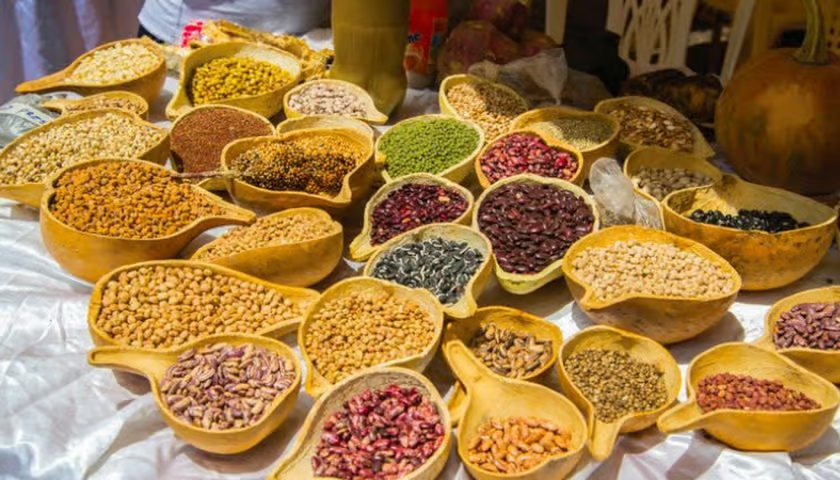
TANZANIA – Support for indigenous seeds is growing across Tanzania as farmers, researchers, civil society groups and policymakers call for stronger protection and wider use of traditional seed varieties.
The movement centres on a simple goal: giving farmers the freedom to save, exchange and plant their own seeds. Supporters say indigenous seeds play an important role in protecting biodiversity, supporting food security and helping farmers reduce their dependence on costly agricultural inputs.
The Tanzania Biodiversity Conservation Network (TABIO), working through the Seed Task Force coalition, has spent more than four years promoting the conservation and recognition of farmers’ seeds. The coalition includes organisations such as Island of Peace, Sustainable Agriculture Tanzania, Tanzania Organic Agriculture Movement and the Federation of Small-Scale Farmers Associations Tanzania (SHIWAKUTA).
According to TABIO Coordinator Abdallah Mkindi, engagement with Parliament, the Ministry of Agriculture and other stakeholders has helped increase awareness of the value of indigenous seeds.
“We, the stakeholders of the Seed Task Force, met with the Ministry of Agriculture and Parliament through the Committee on Industry, Trade, Agriculture and Livestock where we built their understanding on the benefits of farmers’ seeds,” said Mkindi.
One of the group’s key achievements came last year when authorities officially recognised 13 farmers’ seed varieties and included them in the National Variety Register. The recognised varieties include four maize types coordinated by TABIO: Mehe, Erkutoo, Boo and Njano.
The coalition has also established more than 120 community seed banks in regions including Arusha, Dodoma, Mara and Mtwara. These facilities help preserve local seed varieties and give farmers access to seeds suited to local growing conditions.
Supporters warn, however, that many indigenous varieties remain under pressure from droughts, floods, pests, crop diseases and changing food consumption habits. They fear some valuable genetic resources could disappear without stronger legal protection.
“We are appealing to the government to recognise and protect them so they don’t disappear,” Mkindi said.
For many farmers, indigenous seeds also offer financial benefits. Karatu farmer Magreth Basso said traditional seeds helped her reduce spending on commercial seeds, fertilisers and pesticides.
“Every season I had to start afresh. I was forced to buy seeds, buy fertiliser and spend a lot,” she said.
The discussion has also reached international platforms. Agriculture expert Daud Manongi said Tanzania recently took part in the 11th session of the Governing Body of the International Treaty on Plant Genetic Resources for Food and Agriculture in Peru, helping strengthen the country’s voice in global discussions on farmers’ rights, biodiversity conservation and seed systems. Advocates now want Tanzania to adopt stronger laws similar to those in Ethiopia to protect indigenous seeds and support their wider use across the country.
Sign up to HERE receive our email newsletters with the latest news and insights from Africa and around the world, and follow us on our WhatsApp channel for updates.