

Rwanda to establish grain handling hubs to curb post-harvest losses
These hubs will be equipped with advanced pre-cleaning equipment and dryer machines capable of handling eight tonnes of grains per hour.
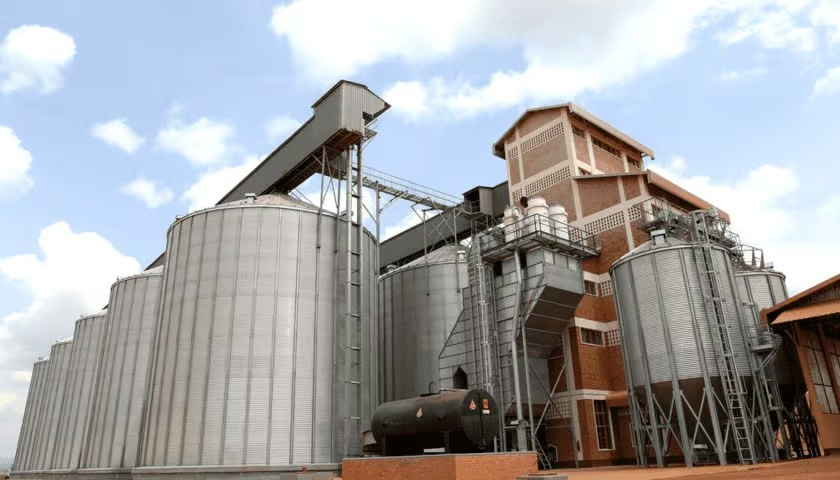
RWANDA – Rwanda has announced plans to establish large-scale grain handling hubs with the capacity to process and store more than 200,000 tonnes of maize, rice, and beans, as part of an ambitious strategy to cut post-harvest losses to below 5% by 2029, down from 13.8% in 2023.
This initiative, part of the Enhancing Post-Harvest Management for Grains in Rwanda project, seeks to transform the agricultural sector by improving storage, processing, and market access for farmers.
Strategic Grain Hubs to Boost Efficiency
The government is constructing four major grain handling hubs, each capable of processing 25,000 tonnes of maize and 18,000 tonnes of rice annually, totaling 100,000 tonnes of maize and 72,000 tonnes of rice.
According to Solange Uwituze, Acting Director General of the Rwanda Agriculture and Animal Resources Development Board (RAB), these hubs will be equipped with advanced pre-cleaning equipment and dryer machines capable of handling eight tonnes per hour for both crops.
The facilities will focus on removing impurities, reducing moisture to prevent mold, and ensuring compliance with food safety standards.
Additionally, 10 smaller hubs will be established at the community level, each with a three-tonne-per-hour dryer, modular silos for seven tonnes of maize storage, and manual bagging systems to improve packaging and handling. These smaller hubs aim to support local farmers and cooperatives by providing accessible post-harvest infrastructure.
The initiative also includes constructing high-capacity silos with a total storage capacity of 80,000 tonnes across four strategic sites, each holding 20,000 tonnes.
Modern equipment, including 10 high-capacity maize shellers processing 20 tonnes per hour and 10 modular silos with six-tonne capacities, will further enhance storage and processing efficiency.
With maize production reaching 481,246 metric tonnes in the 2025 Agriculture Season A, according to the National Institute of Statistics of Rwanda (NISR), and the Eastern Province leading output, these initiatives are critical to sustaining Rwanda’s agricultural growth.
The government’s investment in 26 post-harvest infrastructure projects, including 13 dryers and 13 warehouses, underscores its commitment to food security and economic resilience.
Addressing Farmer Challenges
Farmers across Rwanda have long faced challenges due to inadequate storage and drying facilities.
KABOKU, a cooperative in Nyagatare District representing over 1,000 farmers, produces 4,000 to 5,000 tonnes of cereals per season but lacks sufficient storage, leaving much of their harvest vulnerable to pests and spoilage.
Madeleine Uwimana, a maize and tomato farmer from Kirehe District, highlighted the issue of aflatoxin contamination in maize and significant losses in tomatoes due to the absence of drying and cooling facilities. “Over 15% of maize can be affected by aflatoxin, and around 40% of tomatoes are wasted,” she said.
The new hubs and silos aim to address these issues by providing modern infrastructure to reduce spoilage and improve grain quality, connecting farmers to larger markets and processors.
The Commercialization and De-Risking for Agricultural Transformation Project (CDAT) will also support the construction of warehouses for maize, rice, and Irish potatoes, alongside additional shellers and dryers.
Sign up to HERE receive our email newsletters with the latest news and insights from Africa and around the world, and follow us on our WhatsApp channel for updates.