

Nigeria faces palm oil deficit despite strong production potential
Demand continues to outpace supply, pushing import costs higher and raising pressure on reforms.
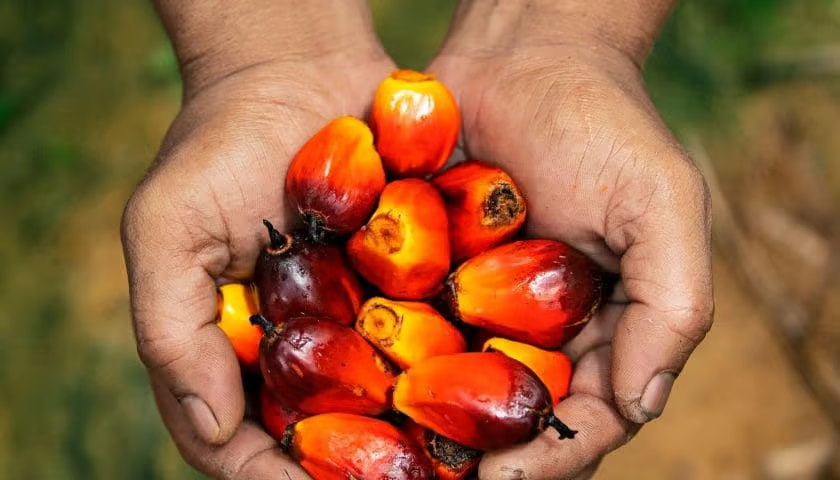
NIGERIA – Nigeria continues to face a wide gap between palm oil demand and local supply, even as the country holds strong potential to grow the sector.
Nigeria’s domestic demand for palm oil exceeds 2.5 million metric tons each year, while production stands at about 1.4 million tons. This shortfall has forced the country to depend on imports to meet local needs, placing added pressure on the agricultural sector.
The Minister of Agriculture and Food Security, Abubakar Kyari, shared these figures during a national stakeholders’ meeting in Abuja focused on boosting palm oil output.
He said Nigeria once led the global palm oil market in the 1960s, supplying more than 40 percent of global output at the time. Palm oil then served as a major export and supported economic growth.
Over the years, production dropped sharply. The country now faces a deficit of more than 1 million tons each year. This gap has led to import costs ranging between US$500 million and US$600 million annually, a sign of lost income and missed growth.
Despite this, Nigeria still has over 3 million hectares of land suitable for oil palm farming. Kyari said the challenge does not lie in land or natural resources, but in limited scale and weak coordination across the value chain.
At the same time, global demand for palm oil remains strong. The market now exceeds US$70 billion each year, with wide use across food, cosmetics, pharmaceuticals, and biofuel industries.
The federal government, under President Bola Tinubu, has placed agriculture at the center of its reform plans through the Renewed Hope agenda. The plan aims to grow local production, support jobs, and improve food security.
Recent policy steps also point to a wider push to rebuild the sector. Earlier this month, the government introduced a national strategy that aims to raise Nigeria’s share of the global palm oil market to 10 percent. The plan also targets the creation of up to 2 million jobs within six years and full self-sufficiency by 2050.
The strategy outlines steps to expand oil palm farming, improve processing systems, and strengthen links between farmers and markets.
It also includes plans to set up a National Palm Oil Council and create funding systems to support growth, with a focus on smallholder farmers who produce most of the country’s output.
Sign up to HERE receive our email newsletters with the latest news and insights from Africa and around the world, and follow us on our WhatsApp channel for updates.