

Jordan buys 60,000 tons of wheat in latest tender
Purchase supports supply plan as government works to keep bread prices stable.
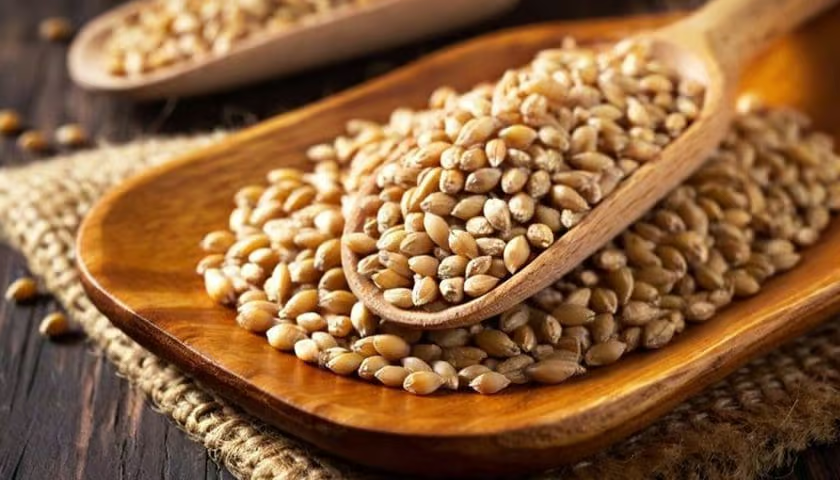
JORDAN – Jordan has bought 60,000 tons of milling wheat in a new tender as it continues to manage supply and keep bread prices within reach for consumers.
The Ministry of Industry and Trade held a tender on April 21 to purchase 120,000 tons of wheat from any origin, according to Zerno On-Line, citing European traders.
The country secured half of the volume from Cargill at a price of US$273.99 per ton on a cost and freight basis. The shipment will arrive between August 16 and 31.
Other firms took part in the tender but did not win contracts. CHS offered US$275.40 per ton, while Bunge and Dreyfus submitted bids of US$281.00 and US$282.00 per ton.
This purchase comes weeks after the government cut flour and wheat prices to support bakeries and protect consumers from rising costs. In April, the price of unified flour fell by JD7.797 per ton to JD167.475 per ton, which equals US$236 per ton, down from JD175.272 per ton, or US$247 per ton, in March.
Wheat prices also dropped by JD6.083 per ton to JD136.238 per ton, which equals US$192 per ton, compared to JD142.321 per ton, or US$201 per ton, in the previous month.
“These adjustments will ease the financial burden on bakeries and ensure that the supply of Arabic bread remains steady,” the ministry said.
Officials said the government reviews production costs on a regular basis and updates prices to reflect market changes while keeping bread prices fixed.
The latest tender also follows earlier efforts to secure supply. In March, the minister told parliament that wheat reserves could cover local demand for about 5.5 months, with more shipments already in transit to extend coverage by another four months.
“Our current stock levels are secure, and we have additional quantities already contracted and in transit,” the minister said.
Authorities have also kept controls on key food exports since November. They require prior approval for exports to protect local supply. At the same time, the government has ruled out new taxes or duties despite higher transport costs.
“We continue to prioritize supply stability and food security for all citizens,” the minister said.
Jordan’s steady purchases and price adjustments show a clear focus on keeping supply stable while limiting pressure on households.
Sign up to HERE receive our email newsletters with the latest news and insights from Africa and around the world, and follow us on our WhatsApp channel for updates.

