

Nigeria unveils national strategy to revive palm oil sector, targeting 10% global market share
The initiative, which aligns with the Renewed Hope Agenda, will focus on expanding oil palm cultivation, modernizing processing facilities, and strengthening market linkages for smallholder farmers. It will also encourage private sector investment to enhance competitiveness and drive exports.
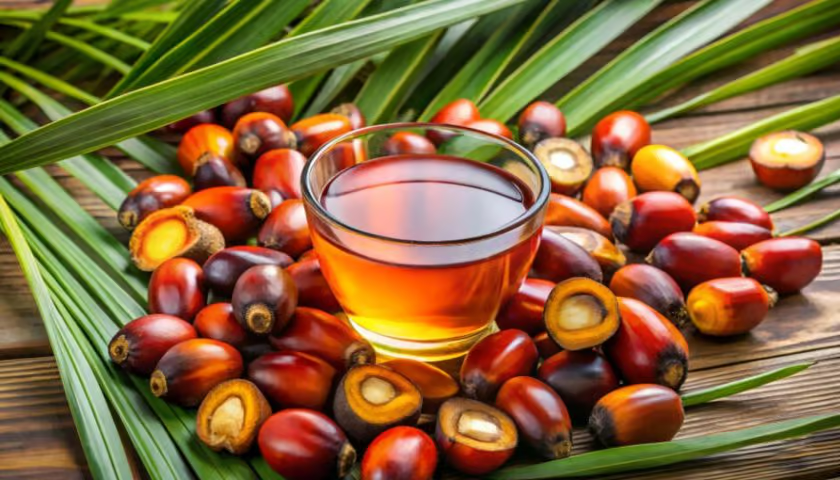
NIGERIA – Nigeria’s Federal Government has unveiled a comprehensive national strategy to revitalize its once-dominant palm oil industry, targeting a 10% share of the global market, the creation of up to 2 million jobs within six years, and achieving self-sufficiency by 2050.
A validation meeting convened by the Federal Ministry of Agriculture and Food Security in Abuja on 2 April 2026 set out the contours of the Nigerian Oil Palm Development Strategy, which officials say will drive food security, rural transformation, industrial growth, job creation, and export diversification.
The strategy includes a multi‑decade policy framework; the Oil Palm Development Policy and Strategy (2026 – 2050), which outlines measures to increase yields, expand cultivated areas, and modernize processing infrastructure, while also proposing institutional reforms to improve sector governance and attract private investment.
Beyond the agricultural sector, the plan also introduces institutional reforms to structure the sector’s governance.
This includes the creation of a National Palm Oil Council, as well as dedicated financing mechanisms, including a sector development fund and a specific fund for small producers.
The strategy prioritizes smallholder farmers, who account for over 80% of output, by providing access to improved seedlings, training in climate-smart practices, and financial incentives for replanting.
Key initiatives include a directive to plant 100 million oil palm trees nationwide, modernizing outdated mills, and launching the National Palm Oil Traceability System (NaPOTS) to combat adulteration and meet export standards for markets such as the EU.
Industry groups like the Oil Palm Growers Association of Nigeria (OPGAN) and Plantation Owners Forum of Nigeria (POFON) have pledged support, aiming to expand plantations by 1.5 million hectares by 2029.
This move addresses longstanding challenges such as low yields, aging trees, and poor infrastructure, positioning palm oil as a cornerstone of food security and economic diversification.
By fostering linkages between farmers, processors, and exporters, the plan seeks to elevate Nigeria from fifth to third globally, rivaling Indonesia and Malaysia.
Currently, local production covers only 75% of domestic market demand. In its latest report on the global oilseed market, the US Department of Agriculture (USDA) expects Nigeria to produce 1.5 million tons of palm oil in 2026, unchanged from the previous year, while consumption needs are estimated at 1.95 million tons.
The current production shortfall is met through imports. According to the USDA, Nigeria imports approximately 92% of its palm oil from Malaysia, while the remainder comes from Ghana, Indonesia, and Côte d’Ivoire.
Furthermore, significant quantities of unregistered palm oil derivatives enter the Nigerian market through informal cross-border channels from neighbouring West and Central African countries, including Benin, Togo, and Cameroon.
On the international front, Nigeria is currently an observer to the Council of Palm Oil Producing Countries (CPOPC), with its observer status set to end in November 2026. Officials are working to ensure a smooth transition to full membership before that deadline.
The validated roadmap, endorsed by stakeholders including farmer cooperatives and development partners, sets implementation timelines, with federal-state coordination through a 16-member inter-agency committee.
Successful execution could restore Nigeria’s agribusiness leadership, supporting pharmaceuticals, cosmetics, animal feed, edible oils and biofuels while empowering women and youth in rural economies.
Sign up to HERE receive our email newsletters with the latest news and insights from Africa and around the world, and follow us on our WhatsApp channel for updates.

