

Kenyan lecturer develops biscuits made from ‘omena’ fish to combat malnutrition
Esther’s product, Omebix, is a biscuit that harnesses the nutrients of omena while providing a mild, savory flavor that children can enjoy.
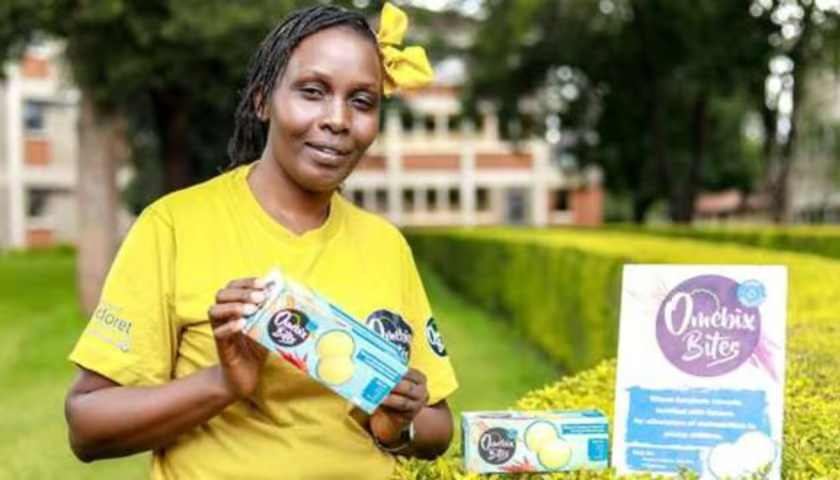
KENYA – Esther Ateka, a lecturer at the University of Eastern Africa, Baraton, has developed Omebix, a biscuit made from the silver cyprinid fish, commonly known in Kenya as ‘omena’, with the intention to feed Kenya’s malnourished children.
The silver cyprinid (Rastrineobola argentea) is a small silvery fish characterized by its compressed body, large scales, pearlescent sheen, and yellow tail. It can grow up to 9 cm (3.5 in) in length.
The fish has a lateral line located below the midpoint of its body, extending to the lower part of the caudal peduncle, and delicate suborbital bones cover its cheeks.
Rich in protein, omega-3 fatty acids, calcium, iron, and essential vitamins, omena shows great promise in addressing nutritional deficiencies.
According to the 2022 Global Nutrition Report, 26.2 percent of Kenyan children under five are stunted, hindering their growth and cognitive development due to malnutrition.
Additionally, 4.2 percent of children suffer from wasting, and 11.5 percent of newborns are underweight.
Esther faced significant challenges in developing this product, particularly in making it appealing to children.
From her small kitchen, she experimented diligently. She dried the fish in the sun, soaked and rinsed it to eliminate the strong odor, ground it into fine flour, and mixed it with wheat and sorghum to create a dough.
When Esther first introduced Omebix to her students at Baraton, they reacted with curiosity and surprise. The subtle taste of fish was noticeable, but it did not overpower the other ingredients.
For Esther, Omebix is not just a snack; it is a tool to save lives. “Each percentage point in those statistics represents a child. Each one is a future that malnutrition could steal,” she said.
Her dream is straightforward yet powerful: to see Omebix reach every home in Kenya, from bustling cities to the most remote villages, providing children with the nutrition they need to thrive.
However, expanding Omebix beyond her kitchen presents a considerable challenge. Esther must secure production facilities, establish a reliable supply chain, and ensure that the biscuits remain affordable.
Perhaps the biggest hurdle is changing people’s perceptions of omena. Convincing them to embrace Omebix and recognize the nutritional benefits of omena requires not only innovation but also a shift in mindset.
Despite the challenges, Esther remains undeterred. “It’s not easy, but if one child becomes healthier because of this, then it’s already worth it,” she said.
Sign up to HERE receive our email newsletters with the latest news and insights from Africa and around the world, and follow us on our WhatsApp channel for updates.