
ITC, PepsiCo eye stake in Balaji Wafers amid surge in regional snack market
Regional brands like Balaji are gaining ground, especially in western and central India, where their deep distribution networks and localized flavors resonate strongly with consumers.
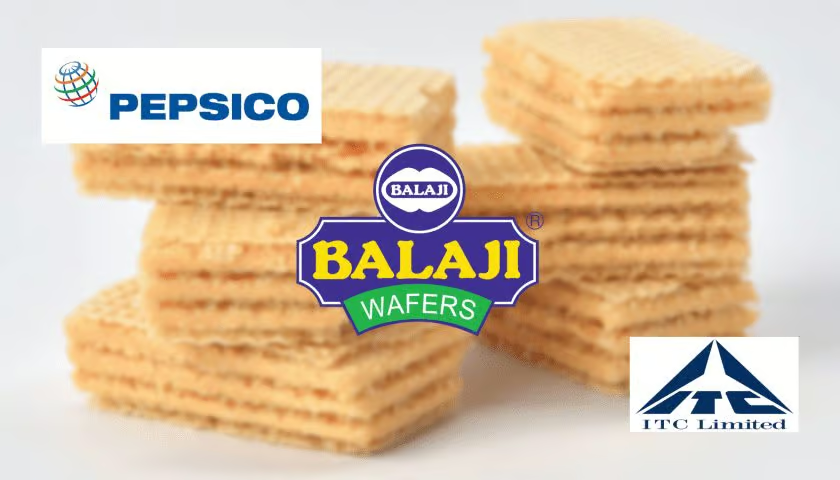
INDIA – Indian FMCG giant ITC and global snack leader PepsiCo are among a group of strategic and private equity investors vying for a 10% stake in Balaji Wafers, one of India’s most dominant regional snack brands.
The proposed deal values the Rajkot-based company at nearly ₹40,000 crore (US$4.53B), reflecting growing investor appetite for regional players that are outpacing national brands in India’s booming packaged food sector.
Alongside ITC and PepsiCo, global investment firms TPG and Temasek, among others, are reportedly in exploratory talks.
While discussions are still in the early stages, some players are reportedly interested in acquiring more than 10%, signaling strong confidence in Balaji’s growth trajectory.
This marks PepsiCo’s second attempt to invest in Balaji Wafers.
Back in 2013, the multinational had expressed interest in acquiring a 49-51% stake, but the deal fell through as the Virani family, Balaji’s promoters, were unwilling to cede majority control.
The renewed interest comes amid a broader shift in India’s snack market dynamics.
Regional brands like Balaji are gaining ground, especially in western and central India, where their deep distribution networks and localized flavors resonate strongly with consumers.
In contrast, larger players like PepsiCo and ITC are facing stiff competition in both ethnic and western snack formats.
Balaji Wafers reported ₹5,453.7 crore (US$617.65M) in revenue for FY24, up 11% year-on-year, with profit after tax rising 41% to ₹578.8 crore (US$65.55M).
The company’s strong financials and loyal customer base make it an attractive target for strategic alliances and backend synergies.
For ITC, whose snack brand Bingo remains a smaller player within its food portfolio, a stake in Balaji could offer a fast-track into regional dominance.
PepsiCo, meanwhile, is looking to regain ground in India’s ethnic snack segment, where it has lost share to nimble local competitors.
The Virani family is reportedly considering professionalizing operations, potentially handing over day-to-day management to external executives, a move that could further facilitate investor partnerships.
As India’s snack market is projected to more than double to ₹95,521.8 crore (US$10.82B) by 2032, the race for a slice of the Balaji Wafers market underscores the rising power of small brands with a significant impact.
Sign up to HERE receive our email newsletters with the latest news and insights from Africa and around the world, and follow us on our WhatsApp channel for updates.