
Global soybean production to reach record 425MT in 2025/26
According to the USDA, Brazil will remain the undisputed leader with approximately 40% of global supply.
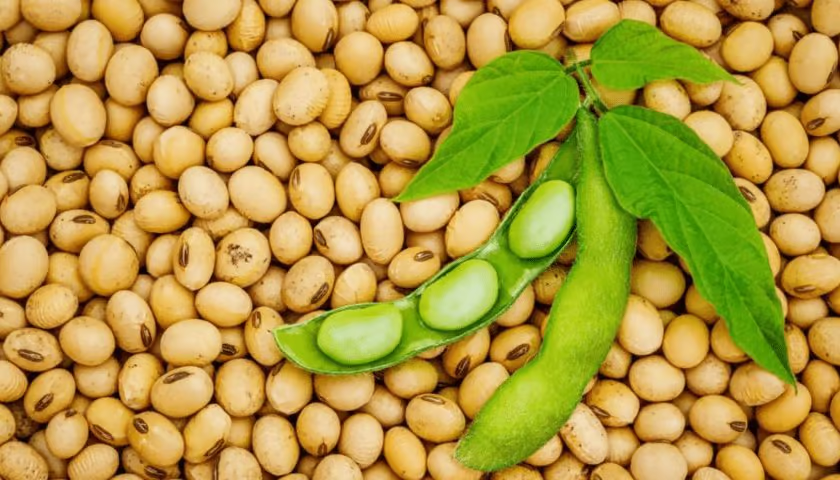
GLOBAL – Global soybean production is forecast to reach 425.8 million tonnes in the 2025/26 season, setting a new record for the crop.
The projection, published in the United States Department of Agriculture’s (USDA) latest outlook, represents an increase of more than one million tonnes compared to the previous year. Since 2015/16, soybean production has expanded by more than 100 million tonnes, outpacing other oilseeds such as palm and rapeseed in terms of growth.
Brazil maintains leadership
Brazil is expected to consolidate its position as the world’s top soybean producer, with output projected at 175 million tonnes. This marks an increase from 169 million tonnes in the previous season and would account for about 40% of the world’s total supply.
The United States, the second-largest producer, is projected to harvest 117 million tonnes, slightly lower than the 2024/25 season, reflecting reduced acreage despite strong yield forecasts. Argentina, ranked third globally, is set to produce 48.5 million tonnes, also reflecting a marginal decline.
China will remain the key driver of global soybean demand. Imports are expected to reach 112 million tonnes, accounting for around 60% of total global trade.
The country’s soybean imports are mainly used for crushing into meal for the livestock sector and oil for food consumption. This heavy reliance on soybean imports underscores China’s central role in shaping global trade flows and price trends.
Beyond seed production, the USDA projects that soybean oil output could surpass 70 million tonnes for the first time in 2025/26. This milestone is significant as soybean oil competes closely with palm oil in the global edible oils market.
The rising demand is also driven by non-food applications, particularly in the biofuels sector. In the United States, for example, more than half of soybean oil production is expected to be directed toward biofuels, strengthening its position as a strategic raw material.
The expansion of soybean oil production is likely to intensify competition with palm oil, especially in markets such as Asia and Africa where edible oil demand is expanding. However, weather conditions remain a major risk factor for soybean yields.
Drought in Brazil or Argentina, or unfavorable weather in the U.S. Midwest, could alter production outcomes. At the same time, trade policies and logistics constraints will continue to influence supply chains, particularly given the high concentration of imports into China.
The 2025/26 soybean season is shaping up to be another record-setting year, with Brazil leading global production and China anchoring demand.
Rising soybean oil output, driven by food and biofuel uses, will add further pressure on the edible oil complex. For the grains, milling, and food processing sectors, managing these shifts in supply and demand will be critical, particularly as price volatility and competition with other vegetable oils intensify.
Sign up to HERE receive our email newsletters with the latest news and insights from Africa and around the world, and follow us on our WhatsApp channel for updates.