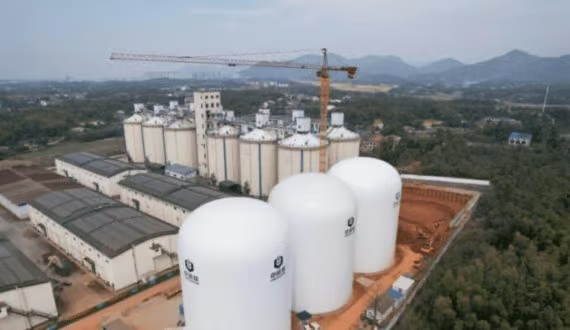

Egypt maintains wheat imports at 13 MMT for MY 2025/26: USDA
Total wheat consumption in 2025-26 is expected to reach 20.4 million tonnes, which would be up nearly 1.5% from 2024-25.

EGYPT – Egypt is projected to maintain steady wheat imports for the 2025/26 marketing year (MY), with imports expected to reach 13.0 million metric tons (MMT), the same as the previous year, according to a report from the Foreign Agricultural Service (FAS) of the US Department of Agriculture.
This stability follows a 4% increase in wheat imports during MY 2024/25, driven by improved foreign exchange availability allowing private companies to purchase larger volumes of milling wheat and an increase in wheat flour exports.
Egypt’s wheat imports remain a key part of the country’s strategy to meet the growing demand for staple grains amid population growth and changing economic conditions.
The forecast for domestic wheat production stands at 9.3 MMT for MY 2025/26, representing a modest 1% increase from the previous year.
FAS attributes this growth to a slight expansion in the harvested area, which will reach 1.43 million hectares, up from 1.4 million hectares in the previous cycle. The government’s decision to set higher procurement prices has also encouraged farmers to dedicate more land to wheat cultivation, enhancing domestic output.
Despite the increase in local production, Egypt’s total wheat consumption is expected to rise by 1.5% to 20.4 MMT in MY 2025/26. The rise in consumption, driven by population growth (which exceeds 107 million and is projected to reach 124 million by 2030), reflects the expanding demand for wheat-based products in both food and industrial sectors.
To meet these needs, wheat flour exports are anticipated to increase by 20%, reaching 1.7 MMT, as Egypt becomes a crucial supplier of flour to countries facing operational milling challenges, especially in the Middle East and Africa.
The Egyptian government’s ongoing reforms are key to the country’s agricultural and food security strategy. In late 2024, the government established the Future of Egypt for Sustainable Development (FoESD), which has taken over responsibility from the General Authority for Supply Commodities (GASC) for organizing wheat tenders and securing food imports.
Poultry recovery boosts corn demand
In addition to wheat, Egypt’s corn production is expected to grow by 3.6% to 7.25 MMT in MY 2025/26. This increase comes as the harvested area expands to 950,000 hectares, driven by growing demand from Egypt’s poultry industry, a major consumer of corn for feed.
Total corn consumption is forecast to reach 15.8 MMT, up from 15.6 MMT, further highlighting the critical role corn plays in Egypt’s agricultural sector.
Meanwhile, rice production is expected to remain stable, with the forecast for milled rice production and harvested area unchanged from the previous year.
According to USDA, rice imports are projected to remain steady at 185,000 MT, as the country’s growing preference for starch alternatives like potatoes and pasta continues to impact rice consumption patterns. Amid these trends, Egypt’s government has maintained its bread subsidy program, a critical tool for ensuring food security for millions of Egyptians.
As of June 2024, the government raised the price of subsidized bread from 5 piasters per loaf to 20 piasters, marking the first price increase in 36 years. The bread subsidy program continues to benefit approximately 66.7% of Egypt’s population, providing each beneficiary with 150 loaves of subsidized bread per month.
However, with inflation pressures and increasing demand for bread, the government is considering shifting to a cash support system to reduce bread consumption and alleviate the wheat import burden.
In another significant development, Egypt’s aquaculture sector is seeing growth despite challenges such as water scarcity and limited disease management knowledge. The country’s aquaculture feed market, driven by demand for marine species feed, is expected to exceed 2.0 MMT by 2032.
Investments in aquaculture feed production, including innovations to improve feed quality and farming efficiency, are seen as key to increasing fish farm productivity and meeting the growing demand for seafood.
The wet milling sector also plays a significant role in Egypt’s agricultural economy, with major companies consuming up to 1.5 MMT of corn annually. Egypt’s corn imports are expected to rise by 200,000 MT to 8.7 MMT in MY 2025/26, driven by increased availability of foreign exchange and the growing poultry sector.
Sign up to HERE receive our email newsletters with the latest news and insights from Africa and around the world, and follow us on our WhatsApp channel for updates.