

China approves 153 wheat varieties to increase productivity
The move aims to improve local production, reduce imports, and support long-term farming efficiency.
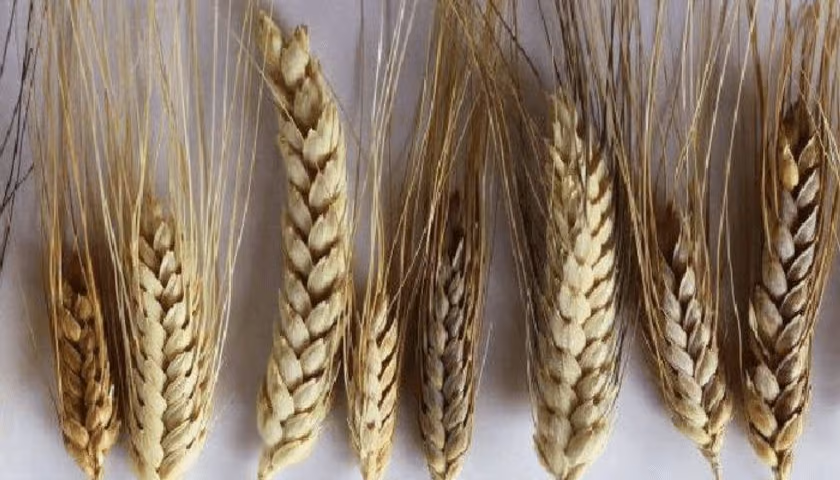
CHINA – China’s Ministry of Agriculture and Rural Affairs (MARA) has approved 153 new wheat varieties, most of which promise high yields and better farm returns.
This decision, announced in July 2025, reflects the country’s strategy to strengthen local crop output while reducing dependence on foreign grain.
Out of the approved varieties, about 80 percent are high-yielding. These varieties are expected to help farmers increase productivity, lower input costs, and cope better with climate challenges.
This push comes as China focuses on improving its food supply systems and making farming more cost-effective and dependable.
According to the Food and Agriculture Organisation’s (FAO) July 2025 country brief, China is expected to produce a record 141 million tonnes of wheat this year.
The rise is supported by favorable weather, strong policy backing, and increased use of high-performing seeds. A grain report from the United States Department of Agriculture (USDA) shows that China’s wheat production rose by 2.6 percent in the 2024/25 period, reaching 140.1 million tonnes.
At the same time, wheat imports dropped by 37 percent, which highlights the progress in local production. “China’s current wheat output has allowed for reduced reliance on imports. That’s an important signal of progress in food self-sufficiency,” said Li Yun, an agriculture economist based in Beijing.
In addition to boosting quantity, China is also investing in gene-editing tools to improve wheat traits such as drought resistance and disease tolerance. These efforts are part of a wider national goal to improve the strength and quality of local grain types, especially for major crops like wheat, corn, and soybeans.
Securing the future
Studies from the Haihe Plain region show that modern wheat types developed in China have better grain-filling rates and heavier kernels. These improvements have contributed to yield growth over the past seventy years. Varieties like Zhongmai 578 and Jimai 22 continue to perform well in different field conditions and show good baking quality.
“Farmers are noticing real differences in performance,” said Zhao Ming, a wheat breeder in Hebei Province.
“The grains are fuller, and we’re seeing better results even with less fertilizer.”
China’s efforts in developing new wheat varieties go beyond approvals. The country is building a stronger system for crop research and trials, backed by government support and collaboration with seed companies.
While the newly approved varieties mark an essential step, China’s broader focus remains on creating a reliable food supply system. With the growing threat of climate change and supply shocks, these moves aim to keep food affordable and farming more stable in the long term.
“Seed innovation alone is not enough,” said Liu Yan, a senior policy adviser at MARA.
“But it is a foundation. We are supporting farmers not just with better seeds but also with training and technical support to ensure these gains reach the ground.”
Sign up to HERE receive our email newsletters with the latest news and insights from Africa and around the world, and follow us on our WhatsApp channel for updates.