

Akwa Ibom state commits US$20M to revive Nigeria’s palm oil sector
Akwa Ibom’s intervention is expected to narrow this supply gap while stimulating rural employment and economic growth in the Niger Delta region.
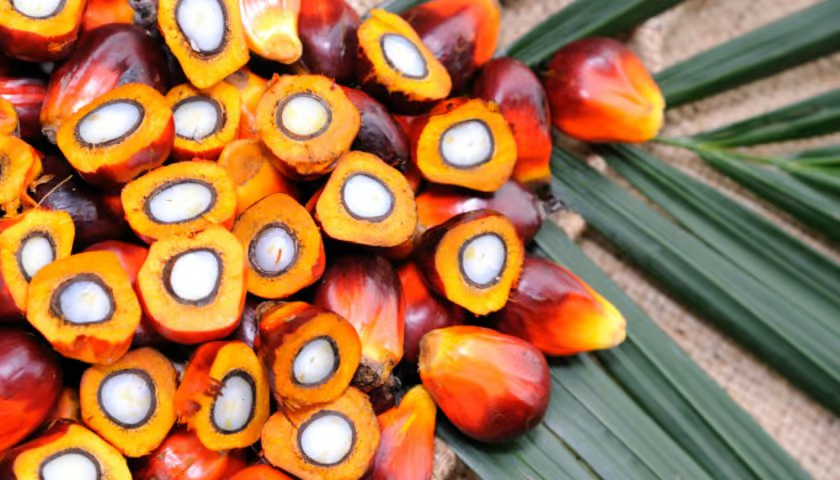
NIGERIA – In a bold move to revitalize Nigeria’s palm oil industry, Akwa Ibom State has announced plans to invest ₦31 billion ($20.2 million) into oil palm development starting in 2026.
The initiative, unveiled by Governor Umo Eno, aims to boost local production, expand cultivation, and enhance the overall palm oil economy.
Additionally, the initiative aims to position the state as a leading player in Nigeria’s agricultural and industrial transformation.
The investment will be channeled into supplying high-yield seedlings to farmers, expanding plantation acreage, and deploying extension workers to support cultivation efforts.
Each of the state’s 31 local government areas is expected to receive ₦1 billion (US$653,296), with additional funds allocated to the Ministry of Humanitarian Affairs to coordinate implementation.
Governor Eno emphasized the strategic importance of the project, noting that it aligns with the National Palm Oil Development Strategy launched earlier this year by the Oil Palm Growers Association of Nigeria (OPGAN).
That five-year roadmap targets the replanting of 1.5 million hectares of palm trees across 27 states by 2030, aiming to restore Nigeria’s former dominance in the global palm oil market.
Despite being Africa’s largest consumer of palm oil, Nigeria still imports roughly 25% of its annual demand, nearly 500,000 metric tons, due to insufficient domestic production.
Akwa Ibom’s intervention is expected to narrow this supply gap while stimulating rural employment and economic growth in the Niger Delta region.
The plan also includes the creation of a state-level palm oil council to coordinate marketing, aggregation, and value chain development.
By formalizing the sector and improving access to inputs, the government hopes to attract private investment and enhance competitiveness.
Industry analysts view the move as timely, given rising global demand for sustainable and traceable palm oil.
With Malaysia and Indonesia dominating global supply, Nigeria’s renewed focus on oil palm could unlock significant export potential under the African Continental Free Trade Agreement (AfCFTA).
The state government has already resumed management of some key state-owned plantations, such as the Dakkada Global Oil Palm Limited, further strengthening its direct involvement in developing the sector.
This investment aims to transform Akwa Ibom’s palm oil industry by increasing production, reducing imports, supporting local farmers, and making a significant contribution to Nigeria’s agricultural diversification and economic resilience goals.
Sign up to HERE receive our email newsletters with the latest news and insights from Africa and around the world, and follow us on our WhatsApp channel for updates.