
ADM advances Nature’s Gold regenerative flour programme with segregated supply chain
The new operational model ensures complete physical separation of regeneratively grown wheat from conventional grain at every stage of the supply chain, from rural farm origins to regional milling facilities.
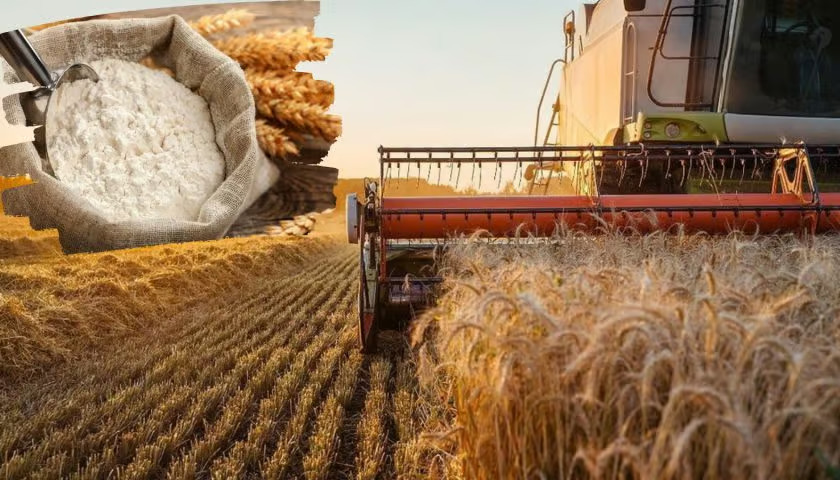
UK – ADM has expanded its Nature’s Gold™ regeneratively sourced flour programme by introducing a segregated supply chain option designed to improve traceability and transparency from participating farms through to the mill.
The move builds on the company’s Nature’s Gold Baker’s Bread Flour and its UK re:generations™ regenerative agriculture programme, providing bakers with greater visibility into the origin and journey of the wheat used in their flour.
Under the new model, wheat produced by participating UK growers using regenerative farming practices is physically separated as it moves through ADM’s supply chain.
This replaces the previous mass-balance approach, in which regenerative and conventional wheat could be combined within the supply chain.
ADM said the segregated system strengthens the connection between growers, grain origination, milling and customers while maintaining the flour’s established quality and performance.
The Nature’s Gold programme is linked to ADM’s re:generations initiative, which supports farmers in adopting practices intended to improve soil health, biodiversity and long-term farm resilience.
ADM defines regenerative agriculture as an outcome-based approach focused on protecting and improving soil health, biodiversity, climate and water resources while creating market opportunities and value for farmers.
For the flour programme, ADM works directly with participating growers and manages the movement of regenerative wheat through its supply chain.
The company said this gives customers greater visibility into where their wheat originates and how it is produced.
The approach is particularly aimed at independent and craft bakers seeking ingredients that can provide clearer sourcing information to consumers increasingly interested in how food is produced.
Ashley Fuller, Managing Director of ADM Milling UK, said the transition from mass balance to segregation represents the next stage of the Nature’s Gold programme.
According to ADM, the change strengthens traceability of the flour proposition while maintaining the consistent performance bakery customers require.
The programme also incorporates lower-emission logistics. ADM is using zero-tailpipe-emission electric heavy goods vehicles to transport wheat between farms and mills as well as flour to bakery customers.
The transport component forms part of the company’s wider effort to connect regenerative agricultural practices with supply-chain improvements.
ADM’s broader re:generations programme engaged approximately 4.6 million acres in 2025, according to the company’s latest regenerative agriculture information.
The programme works with producers, technical partners and customers to develop agricultural supply chains focused on resilience, transparency and farmer outcomes.
The Nature’s Gold regeneratively sourced flour is available through ADM Milling’s nationwide UK distribution network.
The company said the segregated model is intended to strengthen the link between farmers implementing regenerative practices and bakery customers purchasing the resulting flour.
Sign up to HERE receive our email newsletters with the latest news and insights from Africa and around the world, and follow us on our WhatsApp channel for updates.