
Eastern Cape launches grain programme as harvest shows mixed results across South Africa
An R80 million government programme aims to help emerging grain farmers grow their businesses as farmers in other parts of South Africa report mixed harvest results.
SOUTH AFRICA – Emerging grain farmers in South Africa’s Eastern Cape will receive R80 million (US$4.5 million) in government support to help them move from subsistence farming to commercial production following the launch of the province’s Grain Commercialisation Chapter.
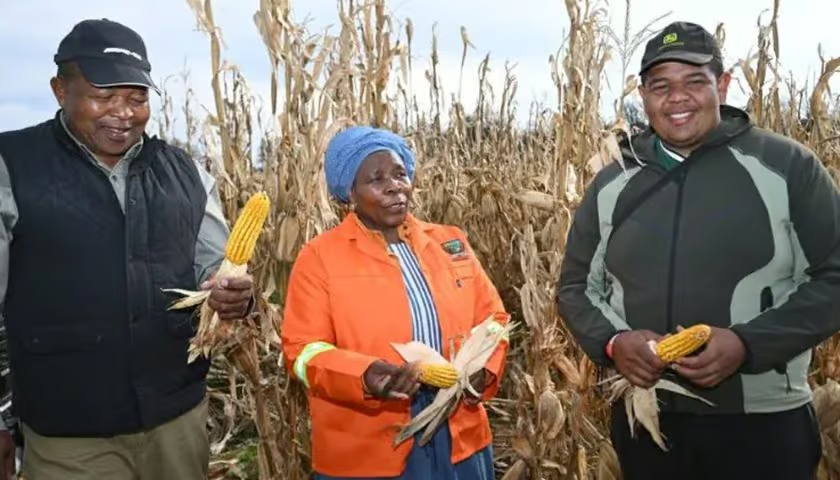
The Eastern Cape Department of Agriculture launched the programme during a Harvest Day at Sonskyn Farm in the Elundini Local Municipality, where farmers, government officials and agricultural leaders met to review grain production and discuss ways to strengthen agricultural value chains.
The Grain Commercialisation Chapter forms part of the department’s Agriculture Commercialisation Programme, which supports emerging farmers to increase production and secure long term markets.
During her 2026/27 budget and policy speech in March, Eastern Cape MEC for Agriculture Nonceba Kontsiwe announced that the department had allocated R80 million (US$4.5 million) to the grain and oilseeds value chain. The funding will support grain and oilseed production across 24,000 hectares in the province.
Kontsiwe said the government remains committed to helping emerging farmers build successful commercial farming businesses by identifying farmers with strong potential and supporting them as they expand.
The event also highlighted the progress of 21 year old farmer Iviwe Sondlo, who leases Sonskyn Farm with his cousin. The pair have planted 47 hectares of maize and supply grain to agribusinesses including BKB in Nqanqarhu and Bester Feed & Grain in Mthatha. Inspired by his father, who taught him to operate a tractor at a young age, Sondlo plans to grow more grain crops and create jobs for young people.
Kontsiwe said grain production plays an important role in livestock farming because quality animal feed depends on a reliable grain supply. Higher grain production also strengthens food security across the province.
The programme comes as maize harvesting continues across South Africa, with farmers reporting fewer grain quality problems than last season but uneven yields between regions.
According to national delivery figures, about 36% of the white maize crop and 52% of the yellow maize crop from the 2025/26 summer grain season have reached silos. Around 95% of the white maize crop has been graded as Grade 1, while 93% of the yellow maize crop achieved the same standard.
“The harvests are coming in more slowly this year because many farmers had to wait for their maize to dry out after a lot of rain fell over parts of the summer rainfall area in March, April and May. Furthermore, the first heavy frost only occurred at the beginning of July. Frost usually helps maize to start drying out ahead of harvest,” said Corné Louw, Grain SA’s head of applied economics and member services.
Farmers in Ermelo reported maize yields ranging from about three to more than eight tonnes per hectare, while some farmers in the western Free State achieved average yields of nine to 10 tonnes per hectare. Others continue to face lower yields and uncertainty over grain prices as they prepare for the next planting season.
Sign up to HERE receive our email newsletters with the latest news and insights from Africa and around the world, and follow us on our WhatsApp channel for updates.