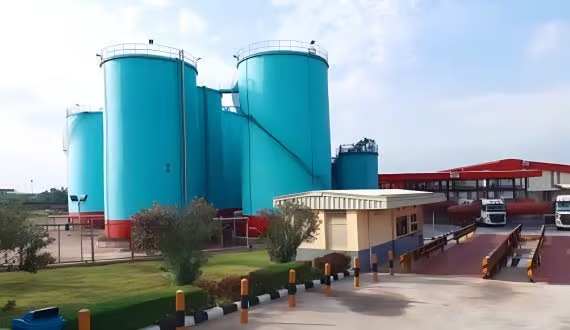

Tunisia’s olive oil export earnings rise as higher volumes offset lower prices
Strong export growth helped Tunisia lift olive oil earnings despite a drop in average prices during the first half of the 2025/2026 season.

TUNISIA – Tunisia’s olive oil sector posted strong export results during the first six months of the 2025/2026 marketing season, with higher shipment volumes helping offset lower prices on the international market.
According to the National Observatory of Agriculture (ONAGRI), olive oil exports generated 3.64 billion Tunisian dinars (US$1.25 billion) between November 2025 and April 2026. The figure marks a 49.2% increase from 2.44 billion dinars (US$839.1 million) recorded during the same period of the previous season.
The increase came despite a decline in export prices. ONAGRI reported that the average price of Tunisian olive oil fell by 8% year on year in April 2026, dropping from 13.77 dinars per kilogram to 12.67 dinars per kilogram. Prices varied by product category, ranging from 8.81 dinars per kilogram to 16.55 dinars per kilogram.
ONAGRI stated, “In April 2026, the average price of olive oil fell by 8% compared to the same period of the previous campaign, from 13.77 DT/kg to 12.67 DT/kg. Depending on the categories, prices vary between 8.81 DT/kg and 16.55 DT/kg.”
While ONAGRI did not identify the reasons behind the price decline, global market conditions point to increased supply and weaker demand. The U.S. Department of Agriculture expects global olive oil consumption to fall by 3% to 3.04 million tonnes during the 2025/2026 season. At the same time, global stocks could rise by 20% to 600,000 tonnes. These factors have added pressure on international prices.
Export volumes played a key role in supporting Tunisia’s earnings. Between November 2025 and April 2026, the country exported 295,400 tonnes of olive oil, compared with 180,200 tonnes during the same period a year earlier. This represents a 63.9% increase in volume.
The strong export performance follows expectations of a record harvest. At the start of the season, industry participants projected olive oil production would rise by 47% to 500,000 tonnes. The larger crop increased the amount of oil available for export and supported Tunisia’s position in global markets.
Despite the gains, ONAGRI noted that bulk shipments continue to dominate exports. Bulk olive oil accounted for 87.5% of exported volume, while packaged products represented 12.5%. Although the share of packaged exports improved slightly from 11.9% a year earlier, the sector still faces challenges in capturing more value from international sales.
If current export trends continue, Tunisia could end the 2025/2026 season with record olive oil export volumes and earnings. Olive oil remains the country’s leading agricultural export and contributes more than half of annual agricultural export revenue.
Sign up to HERE receive our email newsletters with the latest news and insights from Africa and around the world, and follow us on our WhatsApp channel for updates.