Skip to content


Africa
-

Russia expands agricultural sales across Africa as exports rise 35%
Russia increased its agricultural exports to Africa sharply in the first half of 2026, with wheat accounting for more than 90% of shipments to the continent.
-
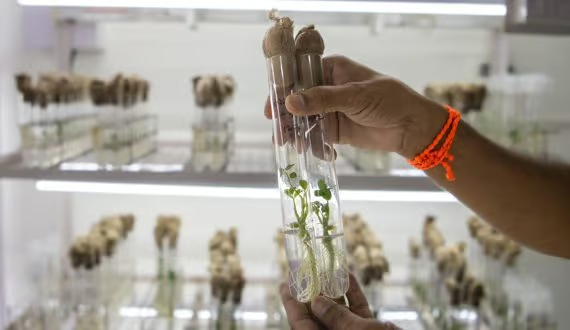
ICRISAT secures gene editing license to speed up climate ready crops
The agreement gives ICRISAT access to gene editing technology that will support faster development of stronger crop varieties for farmers across Asia and Africa.
-

AfricaRice, AATF sign five year agreement to strengthen Africa’s rice production
The new partnership aims to help more farmers access improved rice technologies as Africa works to reduce its dependence on imports.
-

AfDB warns El Niño could cut growth as Africa faces up to US$20B in losses
The bank says stronger climate planning and more funding will help countries reduce the economic impact of the expected weather event.
-

US focuses on wheat quality as it seeks a bigger share of sub-Saharan Africa
The United States wants to grow wheat sales in sub-Saharan Africa by showing buyers the value of higher quality wheat instead of competing on price.