

Malawi expands local fertiliser production as Wait Holdings opens blending plant
The new facility in Blantyre aims to cut Malawi’s reliance on imported fertiliser and improve access for farmers across the country.
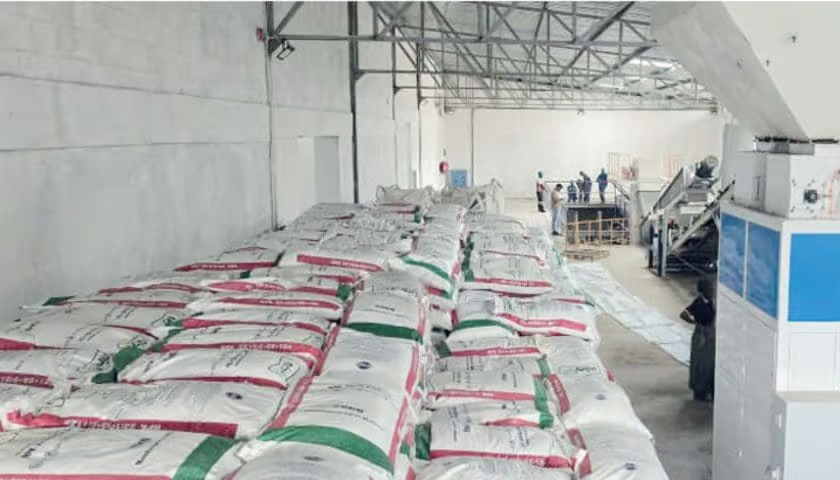
MALAWI – Wait Holdings has started operations at a new fertiliser blending plant in Blantyre, adding fresh momentum to Malawi’s push to reduce reliance on imported farm inputs.
The Malawian-owned company began operations at the Lunzu facility in January 2026 under its MlimiFert brand. The plant can produce 50 metric tonnes of fertiliser per hour, equal to about 30,000 metric tonnes each month.
The investment comes at a time when Malawi continues to face pressure from foreign exchange shortages and high import costs, which have affected fertiliser supplies in recent years. Local media outlet Nation Online reported that the project supports the country’s efforts to strengthen local production and improve fertiliser blends for different crops and soil conditions.
Wait Holdings managing director Irene Mlundira said the company built the plant to meet rising demand from farmers and commercial growers.
“The project is fully operational with blending systems, storage facilities, and quality control processes already in place and installed production capacity of up to 50MT per hour, or 30,000MT per month,” Mlundira said.
She added that the facility already supplies fertiliser blends made for Malawi’s soils and crops.
The plant produces several NPK blends for maize, tobacco, tea, legumes, fruits, and horticultural crops. It also includes a soil testing laboratory that checks raw materials, analyses soil samples, and verifies fertiliser quality.
According to the company, the laboratory will help farmers and institutional buyers receive more accurate fertiliser recommendations while reducing waste and improving crop yields.
Wait Holdings also plans to invest another US$5 million to increase production and improve distribution across Malawi. The company expects to open new outlets in Lilongwe and Mzuzu later this year.
Agriculture policy expert Tamani Nkhono-Mvula welcomed the investment and said Malawi needs more local production as the country still depends heavily on imports from regions such as Russia and the Middle East.
“When you have alternative initiatives like these, this becomes good news and something we need to promote,” Nkhono-Mvula said.
Civil Society Agriculture Network chairperson Herbert Chagona also supported the project.
“International companies have expressed willingness to invest in fertiliser plants, which highlights the viability of such projects,” Chagona said.
The development follows another major fertiliser investment in Africa. Dangote Group recently increased the cost of its fertiliser plant project in Ethiopia from US$2.5 billion to more than US$4 billion.
The expanded project now includes a gas pipeline, power plant, packaging facility, and an NPK blending unit with annual capacity of two million tonnes.
Sign up to HERE receive our email newsletters with the latest news and insights from Africa and around the world, and follow us on our WhatsApp channel for updates.

