

Kenya to halt maize, sugar imports in 2025 after achieving self-sufficiency
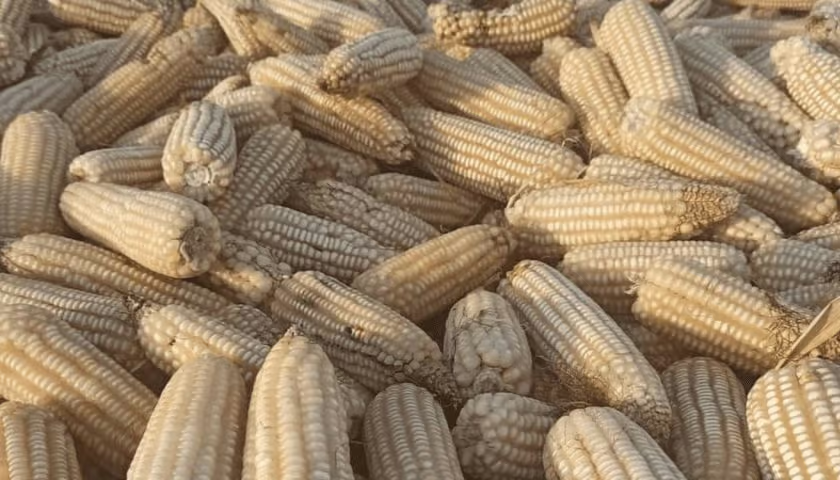
KENYA – Kenya will not import maize or sugar in 2025 for the first time in 16 and 22 years, respectively, following impressive local production, Deputy President Kithure Kindiki has declared.
Speaking at a meeting in Karen, Kindiki noted that in 2022, the government had to issue permits for the importation of 10 million bags of maize. By 2023, imports reduced to around seven million bags, and in 2025, the government will not import a single bag of maize.
Similarly, sugar production has surged to over 900,000 metric tonnes, nearly matching the country’s annual consumption of one million metric tonnes, eliminating the need for imports.
“The interventions in subsidized fertilizer and value chain strengthening have significantly boosted our food security. For the first time in 16 years, Kenya will not import even one bag of maize. The same applies to sugar,” Kindiki said.
According to Kindiki, this marks a significant milestone in the country’s agricultural sector, reflecting successful government interventions aimed at boosting local production.
Rising maize prices in the North Rift
Despite the vice president’s declaration, it is reported that maize prices in the North Rift, Kenya’s grain basket, have been steadily increasing due to dwindling supplies.
As a result, the National Cereals and Produce Board (NCPB), which opened its depots over a month ago, has recorded minimal supplies, as many farmers have refused to sell due to previous payment delays.
Middlemen, on the other hand, have raised prices to as high as KES 3,700 (US$28.60) per 90kg bag, surpassing the KES 3,500 (US$27) per bag offered by the NCPB. Industry stakeholders anticipate that prices could rise further to over KES 4,000 ($31) per bag within the next month.
Farmers have also been holding onto their stock in anticipation of higher prices. Leading maize trader James Kosgey expressed concerns about possible shortages, which could further drive up market prices.
“From the market situation, we have low quantities of maize available, and some farmers are waiting for prices to rise further before selling their produce,” Kosgey said.
Two weeks ago, maize traders in Eldoret were buying at KES 3,400 (US$26) per 90kg bag, but prices have since increased. Some large-scale farmers argue that even the current market rates are insufficient, citing the high cost of farm inputs.
Thomas Korgoren, a farmer in the region, stated that a price of at least KES 5,000 (US$38.60) per bag would be needed for them to realize reasonable profits.
Kindiki emphasized the need to stabilize food and commodity prices to maintain macroeconomic stability. He reiterated that the administration is working daily to regulate the prices of food, fuel, basic commodities, interest rates, inflation, and exchange rates.
Meanwhile, the NCPB has shifted its focus to ensuring an adequate supply of subsidized fertilizer ahead of the upcoming planting season. The board, in collaboration with county officials, aims to enhance accessibility to fertilizer, ensuring farmers are well-equipped for the next cycle of production.
Sign up to HERE receive our email newsletters with the latest news and insights from Africa and around the world, and follow us on our WhatsApp channel for updates.