

EU approves Bunge, CM joint acquisition of Baltic Grain Terminal
The transaction gives Bunge and CM Holding joint control of the terminal, which accounts for about 10% of the Port of Gdynia’s total grain-handling capacity.
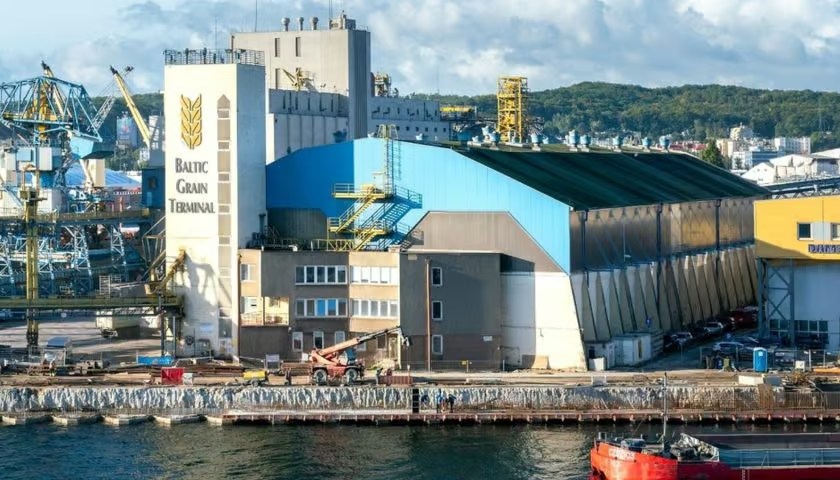
POLAND – The European Commission has approved the acquisition of joint control over Baltic Grain Terminal (BTZ), located at the Port of Gdynia, by Swiss agribusiness company Bunge Global SA and Danish company CM Holding A/S.
The decision clears the transaction under the European Union’s Merger Regulation, allowing the companies to proceed with their planned investment in the Polish port facility.
The Commission concluded that the acquisition would not raise competition concerns because it would have limited impact on competition in the markets where the companies operate.
The transaction involves three companies with complementary activities across agricultural commodity trading, processing and logistics.
Bunge is a global agribusiness company active in marketing and processing oilseeds, vegetable oils, and grains, including wheat, corn, and barley.
CM Holding, associated with Copenhagen Merchants, operates in agricultural commodity brokerage, dry-bulk shipping, agricultural technology and port terminal operations across Europe.
Baltic Grain Terminal handles grain and other dry-bulk commodities at Gdynia, one of Poland’s important maritime gateways for agricultural trade.
According to the European Commission’s notification, the parties formally submitted the proposed concentration on September 7, 2026, under case number M.11903.
The Commission assessed the transaction through its standard merger review procedure and determined that the combined ownership would not significantly restrict competition in the relevant markets.
The clearance removes the European Union competition approval requirement as an obstacle to completing the transaction.
The acquisition is strategically important because port terminals play a critical role in connecting grain producers, traders and processors with international markets.
Gdynia’s Baltic Sea location provides access to maritime shipping routes, supporting the movement of agricultural commodities between Poland and overseas destinations.
Investment in terminal infrastructure can help improve the efficiency of grain handling, storage and shipment, although the extent of any operational improvements will depend on the companies’ implementation plans.
For Bunge, the transaction strengthens its involvement in agricultural commodity logistics in the European market.
For CM, it represents an opportunity to expand its portfolio of port-related operations and deepen its participation in grain supply chains. Joint control could also combine Bunge’s international agricultural trading activities with CM’s expertise in commodity brokerage and terminal operations.
The approval comes amid continuing efforts across Europe to strengthen agricultural supply chains and maintain efficient access to export markets.
While the Commission’s decision confirms that the transaction raises no significant competition concerns, the final commercial benefits will depend on future investment, terminal performance and developments in regional grain trade.
Sign up to HERE receive our email newsletters with the latest news and insights from Africa and around the world, and follow us on our WhatsApp channel for updates.