

Indonesia to prioritise wheat, soybean imports from US amid tariff deal
Wheat and soybean would be the primary focus of the import strategy.
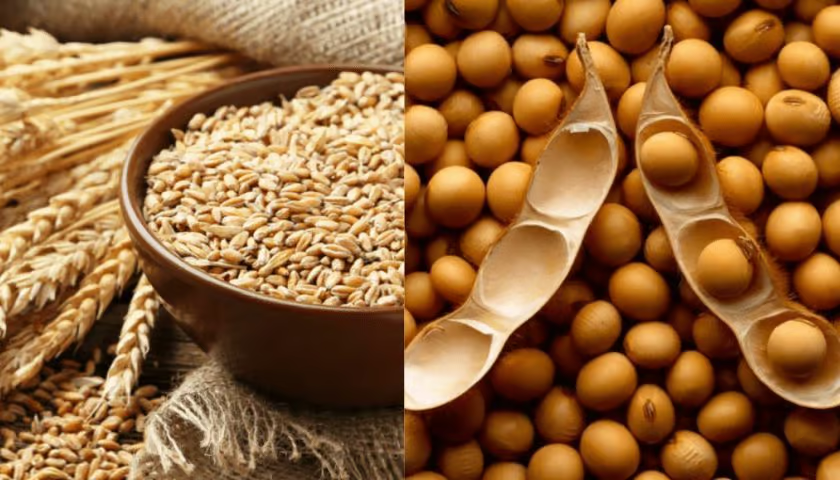
INDONESIA – Indonesia has announced plans to prioritise wheat and soybean imports from the United States as part of a sweeping trade agreement that lowers tariffs and opens new agricultural channels between the two nations.
The move, confirmed by Agriculture Minister Andi Amran Sulaiman, is part of a US$4.5 billion agricultural import commitment tied to a broader reciprocal deal that includes energy purchases and aircraft acquisitions.
Speaking after a high-level food coordination meeting, Minister Sulaiman emphasised that wheat and soybean would be the primary focus of the import strategy, citing domestic supply gaps and the need to stabilise food prices.
“We are focusing on importing wheat and soybeans from the US. These are the two main commodities,” stated Amran, adding that dairy products may be considered in future phases.
The agreement follows a July 16 phone call between US President Donald Trump and Indonesian President Prabowo Subianto, during which the two leaders finalised tariff negotiations.
Under the deal, Indonesia will remove several non-tariff barriers and recognise US FDA certifications for certain goods. At the same time, the US imposes a 19% tariff on Indonesian exports, down from the previously proposed 32%.
According to Indonesia’s Central Statistics Agency (BPS), Indonesia’s soybean imports reached 2.68 million tons in 2024, up nearly 18% from the previous year, with the majority sourced from the US. Wheat imports totalled 8.44 million tons during the first nine months of 2024, valued at US$2.56 billion.
Although US wheat accounted for only 6 to 7% of total volume, the new deal is expected to boost its share significantly.
In a strategic move to solidify the partnership, the Indonesian Flour Producers Association (APTINDO) signed a memorandum of understanding with US Wheat Associates, committing to purchase 1 million metric tons of US wheat annually between 2026 and 2030.
Analysts suggest this could reshape Indonesia’s grain sourcing landscape, which has traditionally leaned on Australia and Canada.
Minister Sulaiman stressed that recommendations from the Ministry of Agriculture would guide all import decisions and would only proceed if domestic production falls short.
“We will continue to protect our farmers. Imports will only happen if domestic production cannot meet national needs,” added Amran.
The deal is seen as a win-win for both countries: it opens new markets for American farmers while helping Indonesia meet rising food demand without compromising local agricultural interests.
With trade flows shifting and tariff barriers easing, the partnership marks a significant step in strengthening bilateral agricultural ties.
Sign up to HERE receive our email newsletters with the latest news and insights from Africa and around the world, and follow us on our WhatsApp channel for updates.