
Ghana invests US$60M in fertilizer projects to cut import dependence
Ghana has lined up two fertilizer projects that could sharply expand domestic production, including a 500,000-ton plant in the Eastern Region and a separate US$10 million organic fertilizer facility.
GHANA – Ghana is advancing fertilizer investments worth about US$60 million as the government seeks to increase domestic production of agricultural inputs, reduce import dependence and improve the availability of fertilizer to farmers.
The developments include a planned US$50 million organic fertilizer blending facility in the Eastern Region and a proposed US$10 million organic fertilizer by Sentuo Group.
The project is expected to have an annual production capacity of 500,000 tons.
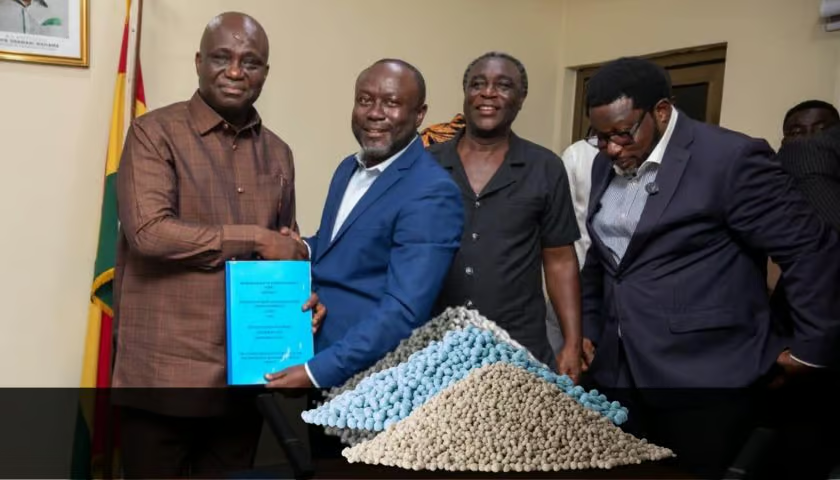
The US$50 million organic fertilizer project is being developed by ABC Oyeasase Yie Ltd in partnership with the Ministry of Food and Agriculture (MoFA).
The two parties signed a Memorandum of Understanding in September 2026 for the establishment of the facility, which is expected to increase local production of organic fertilizer and support the government’s Feed Ghana Programme.
According to MoFA, the facility is expected to improve soil health, create jobs, and support more sustainable agricultural production.
ABC Oyeasase Yie said arrangements were being made to move the project from the agreement stage to implementation.
The company plans to produce organic-based fertilizer intended to supply essential nutrients while improving soil structure and water-holding capacity.
The second investment involves Sentuo Group, whose Executive Chairman Xu Ningquan has indicated plans to establish a fertilizer production plant in Ghana.
Two months earlier, Omanbapa AgriTech signed an agreement with MoFA to establish an organic fertilizer processing and manufacturing plant.
The US$10 million facility will be located in either the Ashanti or Ahafo region, with a joint technical committee selecting the final site. It is expected to start with annual blending capacity of 20,000 to 30,000 tons before expanding to 60,000 tons at full production.
President John Dramani Mahama disclosed the proposal during a September 2026 event in Accra, although details such as the plant’s location, production capacity, financing structure, and construction timetable had not been announced at the time.
The proposed investments come as Ghana seeks to reduce its exposure to imported agricultural inputs.
The Presidential Initiatives in Agriculture and Agribusiness says Ghana currently depends on imports for more than 95% of its agricultural inputs, including fertilizer, pesticides and improved seeds.
Its Agro Input Development Initiative is therefore focused on localizing production to improve self-sufficiency, stabilize prices and ensure timely access to inputs.
Fertilizer availability is also central to the government’s Feed Ghana Programme, which aims to raise agricultural productivity and reduce food imports.
The Ministry of Food and Agriculture identifies improved access to high-quality agricultural inputs as a key component of its crop development strategy.
The 2026 national budget further highlights fertilizer supply as part of Ghana’s agricultural transformation agenda.
The government planned to distribute 272,000 tonnes of fertilizer during 2026, alongside seeds and other inputs, to support increased production across priority crops.
If implemented, the new investments could expand Ghana’s domestic fertilizer manufacturing and blending capacity, potentially reducing reliance on imported products while creating opportunities for local value addition, employment and private-sector participation in the agricultural input industry.
Sign up to HERE receive our email newsletters with the latest news and insights from Africa and around the world, and follow us on our WhatsApp channel for updates.