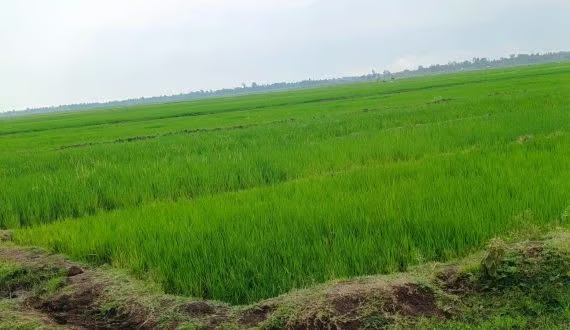

Ghana moves ahead with US$10M organic fertilizer plant
The planned factory aims to increase local fertilizer production, reduce imports, and make use of agricultural waste.

GHANA – Ghana has taken another step to increase local fertilizer production after Omanbapa AgriTech signed a memorandum of understanding with the Ministry of Food and Agriculture to build an organic fertilizer manufacturing plant worth US$10 million.
The agreement, signed on July 28, will support the construction of the factory at a site that will be selected between the Ashanti and Ahafo regions. According to the company, the project will begin with the installation of a mixing unit before expanding into a full processing plant that will produce organic fertilizers for the Ghanaian market. The company also plans to supply other markets in the region in the future.
“The project is expected to begin with the installation of a mixing unit before expanding to a full processing plant to locally manufacture organic fertilizers for the Ghanaian market, with an eventual ambition to also serve regional markets,” the company said in a statement.
The factory will start with an annual production capacity of between 20,000 and 30,000 tonnes before increasing output to 60,000 tonnes per year. It will use agricultural residues, including corn husks and other crop waste, as raw materials.
The investment comes as fertilizer prices continue to face pressure in the global market. In its Commodity Markets Outlook published in April, the World Bank said global fertilizer prices could rise by more than 30% in 2026 because of supply disruptions linked to the conflict in the Middle East.
The institution also expects urea prices to increase by almost 60% compared with 2025, adding to production costs for farmers that depend on imported fertilizers.
The new facility could help Ghana lower its dependence on imported chemical fertilizers while creating demand for agricultural waste that would otherwise remain unused. A stronger local supply of organic fertilizers could also provide farmers with another option as input costs remain high.
The project’s long term success will depend on the company’s ability to produce enough fertilizer at competitive prices and encourage wider use among farmers, who still rely mainly on mineral fertilizers.
According to data from the International Fertilizer Development Centre, Ghana’s apparent consumption of chemical fertilizers averaged about 404,000 tonnes each year between 2019 and 2023. The planned investment marks another effort to strengthen local fertilizer production as the country looks for more stable and locally available agricultural inputs.
Sign up to HERE receive our email newsletters with the latest news and insights from Africa and around the world, and follow us on our WhatsApp channel for updates.