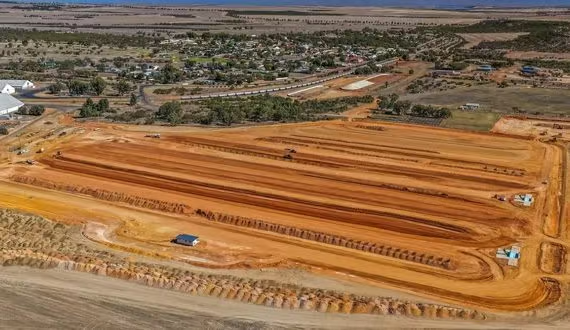

IFC prepares US$174M financing package for Egypt’s Indorama phosphate fertilizer project
The financing comes as tighter global phosphate supplies create fresh opportunities for new producers entering the market.

EGYPT – The International Finance Corporation (IFC) is preparing a financing package of up to US$174 million for the phosphate fertilizer complex that Indorama is developing in Ain Sokhna within Egypt’s Suez Canal Economic Zone.
According to an environmental and social review released on June 16, the package includes an IFC A loan of up to US$100 million and B loans of up to US$74 million. Other lenders and shareholder contributions will provide the remaining funds.
The project marks another step in Egypt’s efforts to expand local fertilizer production and increase the value it earns from its mineral resources. The Ain Sokhna complex officially opened on April 8 during a ceremony attended by Egyptian Prime Minister Moustafa Madbouly.
Indorama is developing the facility through a joint venture between its Dutch subsidiary, Indorama Holdings BV, and Egyptian mining company Misr Phosphate. The first phase carries an investment value of about US$525 million. The IFC and the European Bank for Reconstruction and Development received mandates to manage the debt syndication process.
The financing effort comes at a time when global phosphate markets face growing supply pressure. China, the world’s largest exporter of phosphate fertilizers, suspended exports until August 2026 to secure domestic supply. At the same time, disruptions in the Strait of Hormuz have added pressure to global fertilizer trade routes.
These developments pushed diammonium phosphate (DAP) prices up by about 25% year on year by mid-March, creating favorable conditions for producers that can bring new supply to the market.
Once operations begin, the Ain Sokhna plant will produce about 600,000 tonnes of phosphate fertilizers each year. Nearly 80% of that output will target export markets. Misr Phosphate will supply about 1.25 million tonnes of phosphate rock annually from its mines in Egypt’s Red Sea region.
The project also reflects Egypt’s move toward processing more of its phosphate resources locally instead of exporting raw material. Egypt holds the world’s third-largest phosphate reserves after Morocco and China and has produced phosphate-based products since 1947.
Under the joint venture agreement, Misr Phosphate holds a 15% stake in the project and will receive 20% of production, while Indorama will oversee operations. Production is expected to begin in 2028.
The development supports Egypt’s wider mineral resource strategy. In 2024, the country’s fertilizer exports reached US$2.18 billion, with nitrogen products accounting for 71% of export earnings.
Industry stakeholders expect the new complex to strengthen Egypt’s position in phosphate fertilizer production and increase its presence in regional and international markets.
Sign up to HERE receive our email newsletters with the latest news and insights from Africa and around the world, and follow us on our WhatsApp channel for updates.