
Ghana courts Thai investors to boost palm oil production
Ghana has opened talks with Thai investors as it seeks fresh capital, industry knowledge, and processing capacity to support its goal of achieving palm oil self-sufficiency.
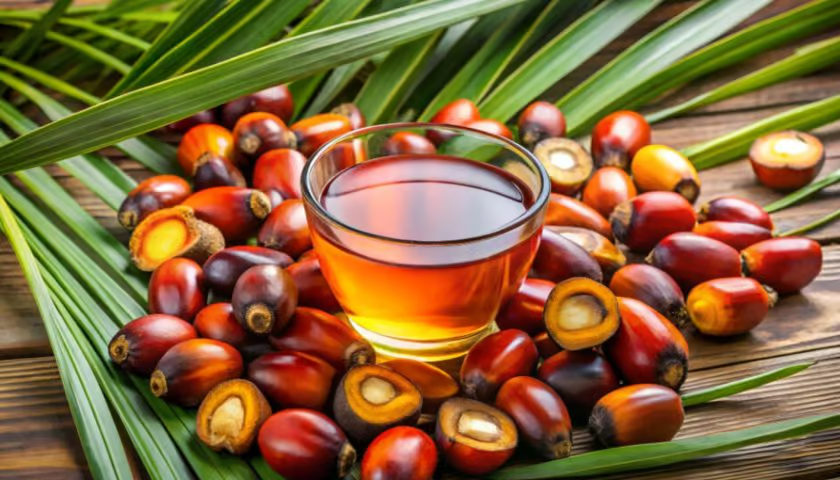
GHANA – Ghana has begun discussions with Thai operators about investing in its palm oil value chain as the government steps up efforts to expand local production and reduce reliance on imports.
The talks took place on June 15 in Accra during a meeting between Deputy Minister of Food and Agriculture John Dumelo and a delegation from Thailand that included officials from the Thai Ministry of Foreign Affairs as well as representatives of Thai companies and financial institutions.
According to a government statement, Thai investors expressed interest in establishing oil palm plantations and processing facilities in Ghana.
“A key point of the meeting was the interest expressed by Thai investors in Ghana’s palm oil sector. The delegation explored opportunities to establish palm plantations and processing units to meet the growing demand in the industry,” the statement said.
In response, the ministry said it would help potential investors gain access to agricultural land in the Oti, Ashanti and Ahafo regions, which Ghana has identified as suitable areas for oil palm cultivation.
Although the two sides have not signed an agreement, the discussions show Ghana’s continued push to attract foreign investment into the sector. Earlier this year, Minister of Food and Agriculture Eric Opoku also called on Chinese companies to invest in the country’s palm oil industry.
The outreach to foreign investors comes as Ghana moves ahead with an oil palm development policy covering the 2026 to 2032 period. The programme includes a financing facility worth US$500 million intended to support industrial projects and new plantations.
According to Ghana’s 2026 Budget and Economic Policy Statement, the facility will provide long-term loans, concessional interest rates and a five-year repayment grace period. The government also plans to finance up to 70% of the cost of eligible industrial projects linked to the sector.
Authorities expect the programme to attract private investment, increase financing and support plans to develop 100,000 hectares of new oil palm plantations.
Beyond investment capital, Ghana also hopes to benefit from Thailand’s experience in the industry. Thailand ranks among the world’s leading palm oil producers and exporters, with annual production of about 3.8 million tonnes, according to data from the U.S. Department of Agriculture. The country exports more than 1 million tonnes each year and has built a strong industry that covers production, processing and distribution.
For Ghana, closer ties with Thai investors could support new processing capacity, knowledge sharing and stronger growth across the local palm oil value chain.
Sign up to HERE receive our email newsletters with the latest news and insights from Africa and around the world, and follow us on our WhatsApp channel for updates.