

Baltic grain surge disrupts urea exports as port congestion delays shipments
The congestion is affecting nearly all fertilizer producers operating in the region and is tightening near-term urea availability ahead of expected demand from major importers, including Brazil.
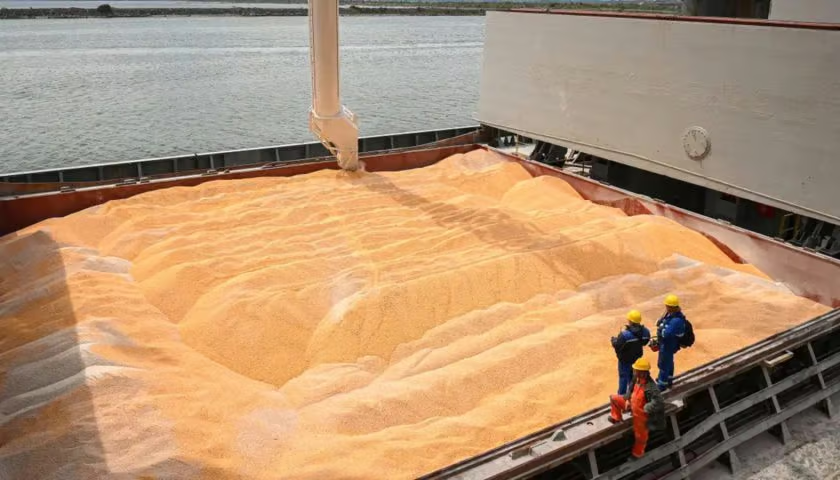
RUSSIA – Surging grain shipments through Baltic Sea ports are disrupting fertilizer export schedules, with urea-loading delays ranging from one week to a month, according to market participants surveyed by S&P Global Energy.
Congestion at port terminals and on connecting rail networks is affecting fertilizer producers across the region, potentially tightening near-term supplies ahead of expected demand from major importers, including Brazil.
The disruption follows a shift of Russian grain exports to the Baltic Sea amid persistent attacks on Black Sea ports, which have constrained trade flows since early July.
Grain exporters have increasingly turned to non-grain terminals, intensifying competition for port capacity alongside steel and fertilizer shipments.
Fertilizer traders reported that the combined pressure on rail infrastructure, storage facilities and port operations was complicating export planning.
One trader said the congestion was affecting virtually all fertilizer producers, while a producer indicated that the severity of delays differed depending on individual facilities and logistics arrangements.
Russian wheat sellers have also struggled to move grain to export terminals. Market participants reported that railway delays and limited storage capacity were restricting offers, while overcrowded terminals were complicating inland transportation and the loading of vessels.
These constraints have raised logistics costs and reduced flexibility for exporters in the region.
One fertilizer trader estimated that approximately 14 million metric tonnes of grain were being redirected from the Black Sea towards the Baltic, adding pressure to already stretched infrastructure.
The trader estimated freight costs for a Handysize vessel carrying a 30,000-tonne cargo from St Petersburg or Ust-Luga to a major Brazilian port at approximately US$60 per tonne.
The higher transportation costs and loading delays could influence the timing and cost of fertilizer deliveries to international markets.
Brazil, a major agricultural producer with substantial fertilizer import requirements, is among the destinations that could be affected if congestion persists.
Delays in Russian exports could complicate procurement schedules for importers seeking to secure supplies ahead of planting and fertilizer application periods.
While delays vary between individual fertilizer operations based on terminal access, dedicated facility owners have managed to mitigate the worst of the fallout due to priority handling arrangements.
Platts pricing assessments, part of S&P Global Energy, held granular urea steady at US$415 per metric ton FOB Baltic Sea and prilled urea at US$360 per metric ton FOB Baltic Sea.
Meanwhile, the Platts Milling Wheat Marker benchmark was US$204 per metric ton out of Black Sea ports, a US$109 per metric ton premium to the CIF East Mediterranean basis for the Egyptian 12.5% protein wheat market.
Sign up to HERE receive our email newsletters with the latest news and insights from Africa and around the world, and follow us on our WhatsApp channel for updates.

