
Ghana targets 100,000Ha for oil palm expansion
The government has renewed its focus on Ghana’s oil palm industry, with the planned expansion forming part of efforts to increase farm output and strengthen local processing.
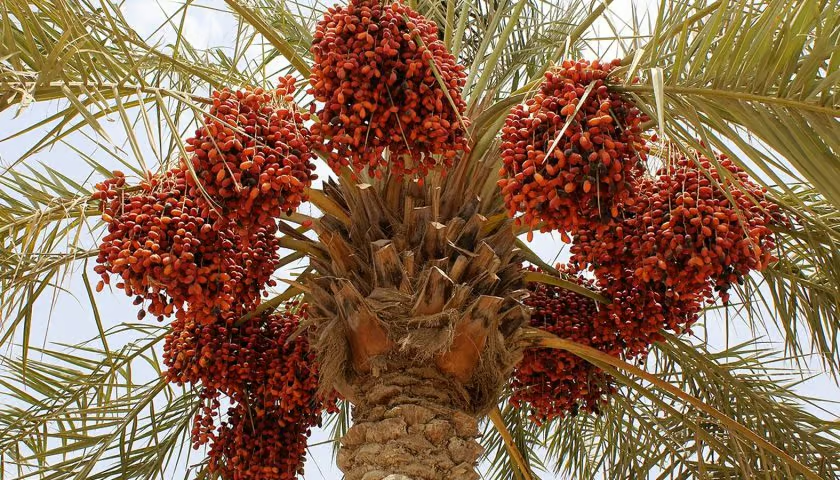
GHANA – Ghana plans to support the development of 100,000 hectares of new oil palm plantations as it seeks to raise local production, create jobs and cut palm oil imports.
Speaking at a National Oil Palm Multistakeholder Roundtable Forum in Accra, Minister of Food and Agriculture Eric Opoku said the programme would help turn government plans into clear results.
The forum brought together government officials, farmers, processors, investors, research bodies, development partners and other groups involved in the oil palm sector.
“Oil palm remains a strategic crop because of its links to both agriculture and industry,” Opoku said.
The crop supports a wide range of businesses, including nurseries, transport firms, processors, traders and manufacturers. It also provides income opportunities for women and young people.
Ghana, however, still produces less palm oil than it needs. The gap has forced the country to rely on imports, which the minister said results in lost jobs, lower farmer incomes and unused processing capacity. It also sends foreign exchange out of the country and creates room for smuggling and unfair competition.
The government wants the Tree Crops Development Authority (TCDA) to play a leading role in improving the sector. The authority will focus on farmer and business registration, licensing, production planning, industry data, traceability, quality standards and coordination.
Opoku said businesses should see formalisation as a way to improve trust, attract investment and gain access to higher value markets. He added that the government would support the TCDA in applying industry standards fairly to protect compliant businesses and consumers.
The minister also stressed that the 100,000 hectare target should not focus only on the size of land planted. Ghana must also improve the quality of planting materials, farm yields and farmer incomes while supporting smallholders, women and young people.
Smallholder farmers will remain central to the plan, with large farms expected to work alongside organised smallholder and out grower schemes. Farmers also need secure markets, fair prices, extension support and affordable farm inputs.
Opoku said the sector needs coordinated action to raise yields, improve traceability and reduce dependence on imported palm oil. The government also wants stronger processing and market links to help Ghana retain more value within the country and improve its position in export markets.
Sign up to HERE receive our email newsletters with the latest news and insights from Africa and around the world, and follow us on our WhatsApp channel for updates.