

US Consumer Price Index holds steady for baked foods and cereal in July
The CPI figures for baked goods and cereal products show negligible change.
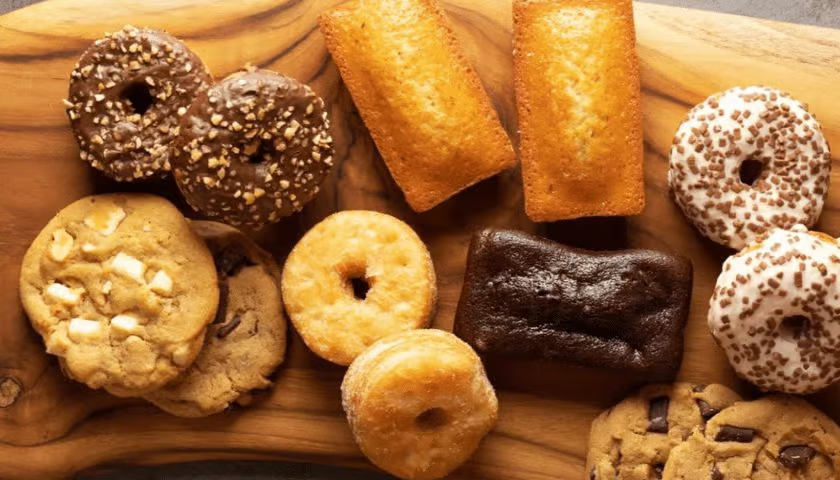
USA – The Consumer Price Index (CPI) for baked foods and cereal products remained unchanged in July, according to the latest data from the Bureau of Labor Statistics (BLS) report released August 12.
This stability comes amid broader concerns over food inflation and trade-related price pressures, with the overall food-at-home index rising a modest 0.1%.
This marks a moderate pace compared to earlier periods of sharp food cost surges.
Of the 18 items tracked by Milling & Baking News, which include a variety of baked goods and cereals such as bread, cakes, cookies, and breakfast cereals, 11 saw month-over-month price declines, six increased, and one remained flat.
Month-over-month, the CPI figures for baked goods and cereal products show negligible change. For July, the bakery products index stood at 360.3, down 0.7% from June, but up 0.7% compared to July 2024.
Cereal category trends
The CPI for cereal and cereal products, including breakfast cereals, flour, and rice, largely tracked sideways, with minor fluctuations across subcategories.
For example, breakfast cereal posted a slight uptick of 0.2% month-on-month but was down 0.2% versus the previous year.
Flour and prepared mixes declined 0.2% from June, yet increased 1.5% over the year.
Rice, pasta, and cornmeal fell 0.9% month-on-month and 2.7% year-over-year, indicating stability and even mild relief for some staple pantry items.
Bakery product trends
Bread prices, tracked within the bakery category, were marginally lower: the July index for bread dropped 0.1% from June and 0.2% from last July.
White bread saw a 1% increase month-over-month, but other bread declined 1.4% compared to June and 0.8% from the prior year.
Sweet baked goods (cakes, cupcakes, cookies) posted small moves, with cookies down 0.4% from the previous month but up 0.6% annually.
Tariff tensions and consumer sensitivity
Andy Harig of FMI, The Food Industry Association, highlighted that while CPI data shows relative stability, underlying uncertainty persists.
Sectoral tariffs on materials like aluminium and steel are beginning to impact food production costs.
According to FMI’s upcoming grocery shopper trends report, 55% of consumers cited tariffs as their top concern regarding food prices.
Overall, July’s CPI report for food at home (including baked goods and cereals) recorded a 0.1% decline, suggesting households are experiencing a pause in rising supermarket prices.
In the broader food category, year-over-year inflation for food at home was 2.2%, below US headline inflation of 2.7%.
Industry analysts believe this stability is driven by a combination of improved supply chains, cooling commodity costs, and subdued demand from price-conscious consumers.
As trade policies evolve and input costs fluctuate, baked goods and cereal prices may face renewed pressure.
For now, however, July’s CPI data offers a brief reprieve for consumers navigating a complex inflationary landscape.
Sign up to HERE receive our email newsletters with the latest news and insights from Africa and around the world, and follow us on our WhatsApp channel for updates.