
Tanzania’s NFRA to invest US$460M in grain storage, boost procurement systems
The funding will be directed toward building new storage infrastructure, refurbishing existing warehouses and establishing mechanization centers
TANZANIA – The National Food Reserve Agency (NFRA) of Tanzania plans to invest US$461 million (1.2 trillion Tanzanian shillings) in expanding its grain storage capacity and upgrading its grain procurement systems, according to Dr. Andrew Komba, NFRA’s chief executive officer.
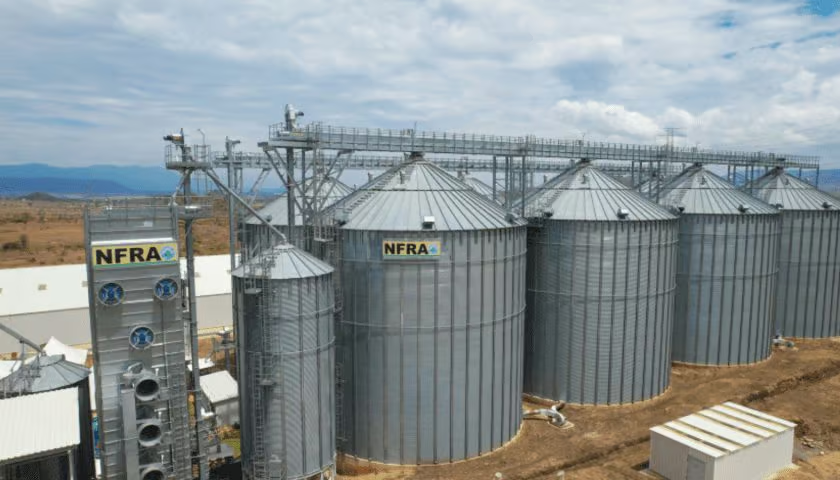
In an exclusive interview, Dr. Komba outlined the agency’s comprehensive strategy to increase storage capacity from the current 776,000 tonnes to at least 1.1 million tonnes.
The funding, sourced from government budget allocations and the agency’s internally generated revenues, will be directed toward building new storage infrastructure, refurbishing existing warehouses, establishing mechanization centers, enhancing digital systems, and supporting large-scale procurement of cereals directly from farmers.
Among the key infrastructure projects, NFRA has allocated US$14 million (36.3 billion shillings) from the Treasury to renovate the Kipawa warehouse in Dar es Salaam and the Mazwi facility in Sumbawanga, which together will offer an additional 60,000 tonnes of storage capacity. New storage towers and silos are also being planned, particularly in grain surplus regions.
Dr. Komba also disclosed that preparatory activities, including land acquisition, environmental impact assessments, and layout planning, are ongoing in various regions as part of a broader national strategy to strengthen food security.
In addition, the agency is in the final stages of obtaining government approval for a food security bond worth US$490 million, aimed at raising capital from local and international lenders.
If approved, proceeds from the bond will be used to construct additional silos and warehouses, especially in the Southern Highlands zone, to add a further 300,000 tonnes of storage.
To bolster its procurement drive, NFRA has earmarked US$308 million (800.6 billion shillings) to purchase 800,000 tonnes of maize, 150,000 tonnes of paddy, and other crops including legumes, millet, sunflower, and sugar. The procurement season is set to commence in mid-July.
Dr. Komba confirmed that 72 purchase centers across eight major regions will be operational during the season. Key locations include Dodoma, Dar es Salaam (Kipawa), Njombe (Makambako), Songwe, Rukwa (Sumbawanga), Arusha (Babati), Shinyanga, and Songea.
In line with digital transformation goals, the agency will roll out a cloud-based food tracking system this year. The platform is designed to replace manual processes with real-time digital monitoring of grain stocks, issuance of goods received notes (GRNs), and expenditure tracking.
“This technology helps us reduce human error, ensure faster service delivery, and uphold transparency in the management of public funds,” Dr. Komba said, noting that the move aligns with the agency’s commitment to modernize operations and enhance accountability.
Sign up to HERE receive our email newsletters with the latest news and insights from Africa and around the world, and follow us on our WhatsApp channel for updates.