

Tanzania launches 1 million tonne fertilizer plant to boost self-reliance
The facility is operated by ITRACOM Fertilizers, a Burundian company, and currently employs 1,500 workers.
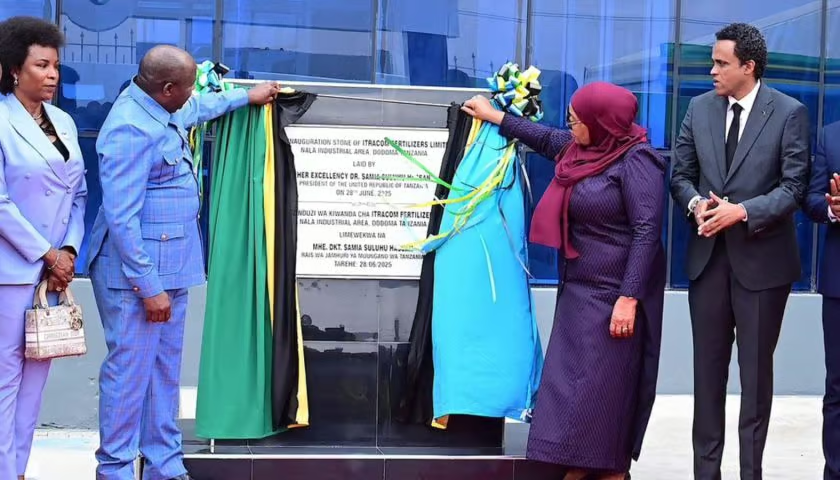
TANZANIA – Tanzania has significantly enhanced its domestic fertilizer production capacity with the official launch of the ITRACOM Fertilizers Limited plant in Nala, Dodoma.
Inaugurated on June 28 by President Samia Suluhu Hassan, the facility is now one of the largest fertilizer manufacturing plants in East Africa, with an annual production capacity of one million tonnes.
The facility is operated by ITRACOM Fertilizers, a Burundian company, and currently employs 1,500 workers, with plans to expand its workforce to 3,000.
The investment aligns with Tanzania’s broader strategy to modernize its agricultural sector by promoting import substitution, job creation, and increased productivity through improved access to agricultural inputs.
President Samia emphasized the strategic importance of the plant, particularly in reducing Tanzania’s and the region’s reliance on imported fertilizers.
“Africa imports up to 90% of the fertilizers it uses, and this has long undermined agricultural productivity. The opening of this facility is a milestone in reversing that trend,” she said during the inauguration.
Africa consumes far less fertilizer than the global average. According to the African Union and the International Fertilizer Development Center (IFDC), African farmers apply just 17 kilograms of fertilizer per hectare on average, far below the recommended 50 kilograms per hectare set under the 2006 Abuja Declaration on Fertilizer for the African Green Revolution.
This underuse is largely due to high prices, inadequate local production, and weak distribution systems.
With its 1 million tonne annual capacity, the Nala plant could meet a significant portion of Tanzania’s national demand, which stands at around 700,000 tonnes per year, according to Tanzania’s Ministry of Agriculture. The surplus could support fertilizer needs in neighboring countries, particularly in the East African Community (EAC).
President Samia highlighted that the project supports Tanzania’s 10-Year Agriculture Development Plan and the country’s Agricultural Sector Development Programme (ASDP II), which seeks to increase productivity and build agribusiness capacity.
“The government’s fertilizer subsidy program, coupled with this investment, is a pathway to higher crop yields and food security,” she noted.
She urged ITRACOM to ensure timely and equitable distribution, especially in rural areas, and to collaborate with agricultural research institutions to train farmers in efficient fertilizer usage. Improved extension services and access to inputs are critical for meeting Tanzania’s goal of doubling agricultural output by 2030.
Also present at the launch was Burundian President Évariste Ndayishimiye, who lauded the bilateral ties between the two nations.
“This factory is not just an investment, it is a symbol of economic cooperation between Burundi and Tanzania,” he said.
He echoed President Samia’s view that the plant will help stabilize fertilizer supply chains across the continent and support the African Union’s food security agenda.
Sign up to HERE receive our email newsletters with the latest news and insights from Africa and around the world, and follow us on our WhatsApp channel for updates.