
Iraq’s wheat production declines amid harsh summer drought
The United Nations ranks Iraq as the fifth most vulnerable country to climate change.
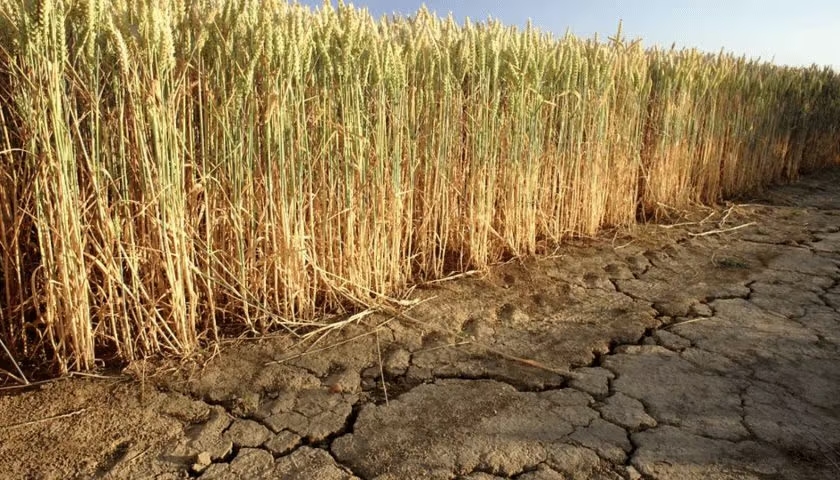
IRAQ – Iraq’s wheat production has taken a significant hit in 2025, with output dropping to 5.12 million tons, down from 5.4 million tons in 2024.
The decline is attributed to a severe summer drought, compounded by reduced rainfall and upstream water restrictions from neighbouring countries.
According to Mahdi al-Jubouri, Iraq’s Deputy Agriculture Minister, the country planted 5.1 million dunams of wheat this year, but the lack of rain and water releases from Turkey and Iran drastically affected yields.
Before the onset of the Ukraine crisis, Iraq achieved wheat self-sufficiency for three consecutive years, with production reaching 4.7 million tons in 2019, peaking at 6.2 million tons in 2020, and settling around 4.2 million tons in 2021.
Due to severe water shortages and advancing desertification, exacerbated by climate change, Iraq faces significant constraints in domestic wheat production, prompting the government to rely on imports to offset the deficit.
The United Nations ranks Iraq as the fifth most vulnerable country to climate change, with the World Resources Institute placing it among 25 nations facing extreme water stress.
Additionally, Iraq uses over 80% of its available water supply, leaving it highly exposed to short-term droughts and long-term desertification.
The absence of formal water-sharing agreements with Turkey and Iran, due to historical and geopolitical reasons, has exacerbated the crisis. Their damming of rivers that flow into Iraq has greatly reduced water availability, especially during an already dry winter season.
Despite the wheat setback, Iraq has maintained a stable production of fruits and vegetables, which require less water to cultivate.
The Ministry of Agriculture has declared wheat self-sufficiency for the third consecutive year, citing government support, improved seeds, fertilisers, and modern irrigation techniques.
However, critics argue that the self-sufficiency claim masks deeper vulnerabilities. Farmers in regions like Mosul report devastating losses, with some earning less than 5% of their investment due to poor yields.
Contrary to this, in Nineveh, rainfall dropped below 100 millimetres, slashing productivity and grain quality.
The impact of the drought extends beyond the agricultural sector. Over 17,000 families have migrated from Basra, Dhi Qar, and Maysan provinces in the past decade due to water scarcity and desertification. Protests have erupted in southern provinces, where residents face severe water shortages and pollution.
As Iraq reels from its driest year since 1993, the government faces mounting pressure to secure water resources, invest in climate-resilient agriculture, and negotiate transboundary water agreements. Without decisive action, the country’s food security and rural livelihoods remain at risk.
Sign up to HERE receive our email newsletters with the latest news and insights from Africa and around the world, and follow us on our WhatsApp channel for updates.