
East Africa launches regional soybean initiative to slash imports
East Africa continues to lag in soybean output despite favorable agro-climatic conditions.
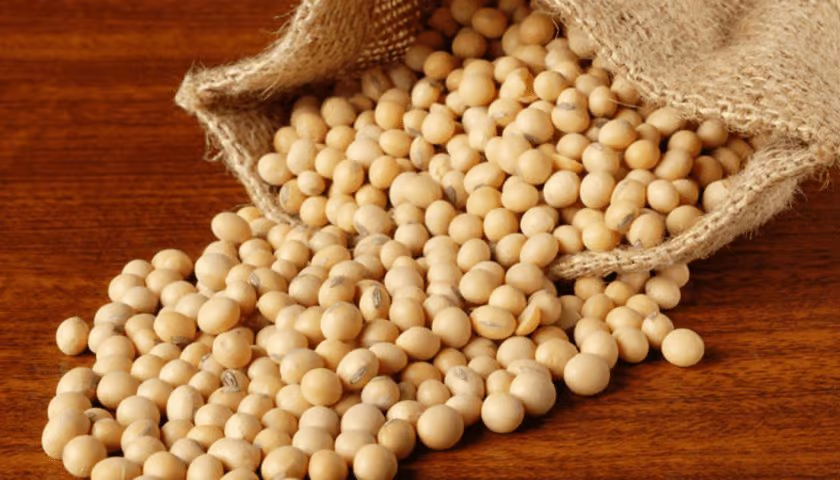
KENYA – A groundbreaking regional initiative has been launched to transform soybean production across East Africa, aiming to reduce the region’s heavy reliance on imports and unlock the crop’s economic and nutritional potential.
Shifting climatic conditions, accelerated urban growth, and evolving dietary habits have fueled rising demand for protein-rich crops like soybeans, despite the region’s limited production capacity across East Africa.
However, East Africa continues to depend significantly on imports, forfeiting the economic gains and nutritional benefits that a robust homegrown soybean industry could deliver.
The initiative brings together Kenya, Uganda, Tanzania, and Ethiopia under a unified soybean breeding and development strategy spearheaded by the International Institute of Tropical Agriculture (IITA) and funded by the Bill & Melinda Gates Foundation.
East Africa continues to lag in soybean output despite favorable agro-climatic conditions.
According to IITA, the average yield in sub-Saharan Africa is just 1.26 metric tonnes per hectare, less than half the global average of 2.76 metric tonnes.
In 2022 alone, Kenya, Tanzania, and Uganda imported over 129,000 metric tonnes of soy products valued at US$84 million, with Kenya’s domestic production meeting only 1% of its annual demand.
The new initiative aims to establish the East African Soybean Breeding Network, a collaborative platform uniting national agricultural research systems, private sector players, universities, and farmer organisations.
The goal is to develop improved, market-aligned soybean varieties that meet regional needs for food, feed, and soil health.
“The goal is not just to improve breeding programs country by country,” said Dr. Lennin Musundire, the project leader.
“It is to create a cohesive regional engine for soybean innovation, one that’s aligned with market needs and built to serve both farmers and processors.”
Soybeans are a vital source of affordable protein and a key input in animal feed and edible oil production.
Their nitrogen-fixing properties also enhance soil fertility, making them a strategic crop for sustainable agriculture.
The project’s first phase involves forming multidisciplinary national stakeholders, including farmers, seed companies, extension agents, researchers, and nutrition specialists, to define market segments and set breeding priorities.
High-demand traits include rust resistance, drought tolerance, early maturity, and improved oil and protein content. By sharing germplasm and technical resources, the network aims to accelerate the development of climate-resilient, high-performing soybean varieties.
Beyond improving production, the initiative is expected to improve nutrition, create new income streams for farmers, and reduce foreign exchange losses tied to soybean imports.
With demand for protein-rich crops rising due to urbanisation and shifting diets, the timing couldn’t be more critical.
East Africa’s soybean revolution is underway, rooted in science, powered by collaboration, and is set to reshape the region’s agricultural future.
Sign up to HERE receive our email newsletters with the latest news and insights from Africa and around the world, and follow us on our WhatsApp channel for updates.